I love a short story and admire anyone who can craft a successful one. Thanks to publishers like Persephone Books and the British Library, it's becoming ever easier to find and enjoy works that would otherwise be lost to history. Persephone has published quite a few short story collections, and I have recently finished 'The Woman Novelist and Other Stories' by Diana Gardner.
Showing posts with label short stories. Show all posts
Showing posts with label short stories. Show all posts
26 September 2023
03 August 2023
'Illuminations' by Alan Moore


11 October 2022
'A Snow Garden & Other Stories' by Rachel Joyce

04 September 2021
The Real Deal
'Reality and Other Stories' by John Lanchester
So, as the nights are drawing in (just) and autumn is around the corner (more or less), it's time for a spine-chiller! And they don't come more chilling than 'Reality and Other Stories' by John Lanchester.
09 April 2021
Legs Eleven
'Eleven' by Patricia Highsmith
2021 is the 100th anniversary of the birth of one of my favourite authors, Patricia Highsmith. Best known for 'Strangers on a Train' and the five Tom Ripley books, her work has often been introduced to new generations through film adaptations. I discovered her via the 1999 Antony Minghella film 'The Talented Mister Ripley', and was hooked from that moment on - an atypical instance of a film doing justice to a novel. While too many of her works are currently out of print, I did manage to get hold of an ebook version of her short story collection 'Eleven'. But was is worth the effort?
29 October 2014
Pound for Pound
Unfortunately, it's been quite a disappointing month for me, reading-wise. Don't get me wrong, it's been fabulous in terms of buying books, with new novels from Bernard Cornwell and Rachel Joyce coming out, plus Books are My Bag, but that sort of thing is not going to lead to a happily every after for my strained bookshelves. So, to try to get back on track, I decided to read something short. It turns out that, at just 88 pages, you can't get much shorter than 'The Tiny Wife' by Andrew Kaufman.
'The Tiny Wife' is the story of a very unusual robbery and its consequences. An unconventional thief with a gun enters a bank one Wednesday afternoon, but he doesn't want money. Instead, he steals one item of sentimental value from each person in the building before making his escape. This seems odd enough, but soon strange things start happening to the victims...
Andrew Kaufman's work is certainly an acquired taste. It's magical, surreal, off-the-wall, creative, fantastical, hypnotic, peculiar and, on the face of it, rather random. But this writer knows exactly what he's doing. Even a story as short as this makes you think and look at things a little bit sideways for a while. The best comparison I can think of is a fairy tale, in which tricks teach lessons and the normal rules simply don't apply.
If you like the sound of this sort of tale of the unexpected, then I would recommend this book and other work by Andrew Kaufman. I do have one caveat, however. This isn't really a book. It's a short story. In fact, it's not even really a short story. It's a 88 pages of short story, with illustrations, and 24 pages of 'Born Weird', written by the same author, so it's more like a promo for another book. I didn't realise this when I picked it up, so would've felt a cheated if I'd paid the full price for it. No short story is worth £6.99. A few pounds, definitely, but not the same as a full length novel. Also, I don't like paying to be advertised to. Fortunately (or unfortunately for the publishers) and perhaps proving theories suggested in my post about 'All My Friends are Superheroes' right, I found this book for £1 in a discount shop. While that was too far to the other extreme, it's hard not to wonder whether it wouldn't have ended up there if priced more reasonably in the first place.
All I can say is this; Mr Kaufman, please stop teasing us and publish a book of short stories. I'd be more than happy to pay full price for that.
Related Posts
'All My Friends Are Superheroes' by Andrew Kaufman
'Fragile Things' by Neil Gaiman
 |
| 'The Tiny Wife' by Andrew Kaufman (The Friday Project, 2013) |
Andrew Kaufman's work is certainly an acquired taste. It's magical, surreal, off-the-wall, creative, fantastical, hypnotic, peculiar and, on the face of it, rather random. But this writer knows exactly what he's doing. Even a story as short as this makes you think and look at things a little bit sideways for a while. The best comparison I can think of is a fairy tale, in which tricks teach lessons and the normal rules simply don't apply.
If you like the sound of this sort of tale of the unexpected, then I would recommend this book and other work by Andrew Kaufman. I do have one caveat, however. This isn't really a book. It's a short story. In fact, it's not even really a short story. It's a 88 pages of short story, with illustrations, and 24 pages of 'Born Weird', written by the same author, so it's more like a promo for another book. I didn't realise this when I picked it up, so would've felt a cheated if I'd paid the full price for it. No short story is worth £6.99. A few pounds, definitely, but not the same as a full length novel. Also, I don't like paying to be advertised to. Fortunately (or unfortunately for the publishers) and perhaps proving theories suggested in my post about 'All My Friends are Superheroes' right, I found this book for £1 in a discount shop. While that was too far to the other extreme, it's hard not to wonder whether it wouldn't have ended up there if priced more reasonably in the first place.
All I can say is this; Mr Kaufman, please stop teasing us and publish a book of short stories. I'd be more than happy to pay full price for that.
Related Posts
'All My Friends Are Superheroes' by Andrew Kaufman
'Fragile Things' by Neil Gaiman
07 September 2014
More than Skin Deep
I've just finished 'The Illustrated Man' by Ray Bradbury, a collection of short pieces by the master story teller.
 |
| 'The Illustrated Man' by Ray Bradbury (Harper Voyager, 2008) |
When the unnamed narrator meets the Illustrated Man on a deserted Wisconsin road, he has no idea what secrets he has hidden beneath his thick shirt. For the Illustrated Man's skin is tattooed with pictures that grow, move and tell stories of the future, cursing every moment of his life as they writhe beneath his skin. Driven to despair and unable to hold down a job for more than a few days, the Illustrated Man keeps moving from place to place searching for a peace he will never find. On this particular night, as he drifts off to sleep, the narrator becomes entranced as the tales of hope, beauty, horror and revenge come to life before him...
Mr Bradbury is most famous 'Fahrenheit 451', the novel about a dystopian future where books are banned and burned and a life lived through TV is the norm. Similar themes of threat, dehumanisation and how we gain and loose from technological developments also run through 'The Illustrated Man'.
Sometimes technology turns on us and leads to disaster, as in 'The City' or 'Kaleidoscope', while 'The Rocket' is a story of how it inspires. 'Marionettes, inc' and 'Usher II', clearly related to 'Fahrenheit 451', show dashes of dark humour, while 'The Fox and the Forest' is a thriller that just happens to be about time travel. 'The Other Foot' explores racial hatred from a new perspective, while 'The Veldt' and 'Zero Hour' show a worrying distrust of children.
Sometimes technology turns on us and leads to disaster, as in 'The City' or 'Kaleidoscope', while 'The Rocket' is a story of how it inspires. 'Marionettes, inc' and 'Usher II', clearly related to 'Fahrenheit 451', show dashes of dark humour, while 'The Fox and the Forest' is a thriller that just happens to be about time travel. 'The Other Foot' explores racial hatred from a new perspective, while 'The Veldt' and 'Zero Hour' show a worrying distrust of children.
The best science fiction is always about humanity and this collection of stories is no exception. It's probably a bit more niche than some of what I've read previously, as in there are stories actually set in space and on other planets, but overall this ensemble captured my imagination, without frightening me off with the 'sciency bit'.
I've never really understood why people dismiss science fiction. Why write off a whole genre? A good story is a good story, whether it's set in the past, present, future or a space station somewhere to the left of Mars. As is often the case, many of these stories can be filed under more than one category, which I think makes them easier to recommend to people who would normally baulk at the idea of reading science fiction.
Overall, if you're going to read science fiction short stories, Bradbury is where you start. I also enjoy Asimov, but his stories are basically logic problems as he tries to find holes in the three laws of robotics. But that's a review for another time!
12 August 2014
Double Oh Zzzzzzz...
As a mini-project within a project, I'm still working my way through all of Ian Fleming's James Bond novels and I have now finished 'Octopussy, the Living Daylights and Other Stories'. It was another AudioGo audiobook, this time read by Loki himself, Tom Hiddleston.
This short collection includes four stories. In 'Octopussy', a psychopathic Major finally gets his just rewards courtesy of the local wildlife, while 'The Property of a Lady' appealed to my love of shiny things as the plot revolves around the auction of a rare jewelled Fabergé sphere. Bond takes on an unlikely Russian sniper in 'The Living Daylights'. Finally, the collection concludes with '007 in New York', about... erm... James Bond in New York. This is read by the author's niece, Lucy Fleming,
Unfortunately, things didn't go well between me and this book from the start. I fell asleep while listening to 'Octopussy' and had to replay it again from the beginning to catch up. In retrospect, I'm not surprised, because it's not really a James Bond story (it just happens to have James Bond in it) nor is it a great short story. It's plodding and predictable and I've come to expect more now I've encountered so much great work from Mr Fleming.
'The Property of a Lady' left me surprised and disappointed as the complex set up didn't deliver the plot twist I expected, while '007 in New York' felt a bit like a fan-focussed Easter Egg, a secret extra for the eyes of real obsessives only.
The best of the four was definitely 'The Living Daylights', a story which draws the reader into the working life of a jobbing double-0. It opens up the the events leading up to the assassin's gunshot, the tedium of waiting, the meticulous planning, the risk of getting caught. It had tension and provided insight into a character that we all think we know.
I felt a bit sorry for Tom Hiddleston really. He didn't have as much to work with as some of the other actors who have narrated CDs in the 007 Reloaded series, but that didn't stop him trying. He clearly had a lot of fun voicing Major Dexter Smythe in 'Octopussy', although it did make me smile a couple of times. I couldn't help being reminded of Kulvinder Ghir in the 'Goodness Gracious Me' Coopers/Kapoors and Robinsons/Rabindranaths sketches. Both probably had the same inspiration.
Overall, I would recommend this as a curiosity, something to read so you can say 'I've read all the James Bond books'. It's not got the energy of the other stories I've listened to so far, so in a way, here, Mr Fleming is a victim of his own success. I'm hoping it's just a blip and that Bond will be back on form for 'Thunderball'. After all, James Bond will return...
Related Posts
'Casino Royale'
'Live and Let Die'
'Dr No'
'For Your Eyes Only'
 |
| 'Octopussy and The Living Daylights' by Ian Fleming (Vintage, 2012) |
Unfortunately, things didn't go well between me and this book from the start. I fell asleep while listening to 'Octopussy' and had to replay it again from the beginning to catch up. In retrospect, I'm not surprised, because it's not really a James Bond story (it just happens to have James Bond in it) nor is it a great short story. It's plodding and predictable and I've come to expect more now I've encountered so much great work from Mr Fleming.
'The Property of a Lady' left me surprised and disappointed as the complex set up didn't deliver the plot twist I expected, while '007 in New York' felt a bit like a fan-focussed Easter Egg, a secret extra for the eyes of real obsessives only.
The best of the four was definitely 'The Living Daylights', a story which draws the reader into the working life of a jobbing double-0. It opens up the the events leading up to the assassin's gunshot, the tedium of waiting, the meticulous planning, the risk of getting caught. It had tension and provided insight into a character that we all think we know.
 |
| 'Octopussy and the Living Daylights and Other Stories' by Ian Fleming. (AudioGo, 2012) |
Overall, I would recommend this as a curiosity, something to read so you can say 'I've read all the James Bond books'. It's not got the energy of the other stories I've listened to so far, so in a way, here, Mr Fleming is a victim of his own success. I'm hoping it's just a blip and that Bond will be back on form for 'Thunderball'. After all, James Bond will return...
Related Posts
'Casino Royale'
'Live and Let Die'
'Dr No'
'For Your Eyes Only'
01 August 2014
Shooting from the Hip
A few weeks ago, the lovely people at Blinding Books were kind enough to send me a copy of 'My Baby Shot Me Down', an anthology of poetry and prose by ten women writers. Now, I know I shouldn't really stray from my list, but they asked so nicely. And I love a good short story.
'My Baby Shot Me Down' features the work of Clarissa Angus, Katherine Black, Maggy van Eijk, Harriet Goodale, Deborah Hambrook, Claudine Lazar, Rachael Smart, Ruth Starling, Alison Wassell and Laura Wilkinson. Some are award winners, but all could be described as up-and-coming writers. The selected pieces range from the tragic to the poignant to the funny and capture the lives of women and girls of all ages.
OK, confession time. I didn't read all of this book. Now you've picked yourselves up off of the floor, here's why. I've never really understood poetry and, despite the best efforts of my school teachers, find it a completely alien language that is impenetrable to me. It's not the poet's fault at all and no reflection on the quality of the work in 'My Baby Shot Me Down', but after a couple of attempts I did skip all the poetry in this volume to focus on the work I could enjoy.
I do absolutely love short stories and this book includes a number of memorable examples. They range from the bitterly funny 'A Game to Play', about how to be an (im)perfect man, and 'The Great Escape', the tale of how institutional help can hinder, to the chilling 'The Whispering Wall' and 'Mr Brown'. 'Ashes' and 'Love and App-iness' made me laugh, while 'We'll Meet Again' and 'Tissue Atlas' made me cry. 'Buried' reminded me of summers long ago. 'Supermarket Secrets' made me realise how rare it is to read about ordinary women in more ordinary jobs rather than journalists, actors, lawyers and PRs.
Overall, this book is great as a showcase for not-quite-discovered writing talent, demonstrating depth and breadth as well as bringing to the fore themes that women in particular can relate to. Although some of the flash fiction felt a bit too short, the book is certainly thought provoking. I suddenly realised after reading 'Supermarket Secrets' that I couldn't think of any other piece of fiction set in a supermarket, which is odd when you consider how many people work in them and how ubiquitous they are. It also got me wondering about the way book genres work. I know I read an awful lot of historical fiction and not nearly enough modern books, but am I imagining the disproportionate number of strong women in the former? Only reading my 500-odd books will tell!
This anthology worked its magic enough for me to want to buy other work by these authors. They are certainly names to watch and I would recommend 'My Baby Shot Me Down' to anyone keen to try something new.
 |
| 'My Baby Shot Me Down' by Various Authors (Blinding Books, 2014) |
OK, confession time. I didn't read all of this book. Now you've picked yourselves up off of the floor, here's why. I've never really understood poetry and, despite the best efforts of my school teachers, find it a completely alien language that is impenetrable to me. It's not the poet's fault at all and no reflection on the quality of the work in 'My Baby Shot Me Down', but after a couple of attempts I did skip all the poetry in this volume to focus on the work I could enjoy.
I do absolutely love short stories and this book includes a number of memorable examples. They range from the bitterly funny 'A Game to Play', about how to be an (im)perfect man, and 'The Great Escape', the tale of how institutional help can hinder, to the chilling 'The Whispering Wall' and 'Mr Brown'. 'Ashes' and 'Love and App-iness' made me laugh, while 'We'll Meet Again' and 'Tissue Atlas' made me cry. 'Buried' reminded me of summers long ago. 'Supermarket Secrets' made me realise how rare it is to read about ordinary women in more ordinary jobs rather than journalists, actors, lawyers and PRs.
Overall, this book is great as a showcase for not-quite-discovered writing talent, demonstrating depth and breadth as well as bringing to the fore themes that women in particular can relate to. Although some of the flash fiction felt a bit too short, the book is certainly thought provoking. I suddenly realised after reading 'Supermarket Secrets' that I couldn't think of any other piece of fiction set in a supermarket, which is odd when you consider how many people work in them and how ubiquitous they are. It also got me wondering about the way book genres work. I know I read an awful lot of historical fiction and not nearly enough modern books, but am I imagining the disproportionate number of strong women in the former? Only reading my 500-odd books will tell!
This anthology worked its magic enough for me to want to buy other work by these authors. They are certainly names to watch and I would recommend 'My Baby Shot Me Down' to anyone keen to try something new.
13 June 2013
Previously from The Girl Who Loves Books II
Hello everybody! You may have noticed that I'm letting the side down again and am taking a while finishing 'The Unknown Ajax' by Georgette Heyer. By way of an apology. here are a few notes on some books I read before starting this blog. I hope you enjoy them and perhaps find something you'd like to read while you wait for a new post!
'Ross Poldark' by Winston Graham
This is the first novel in the famous `Poldark' series by Winston Graham. The books are probably better know via the popular seventies television series starring Robin Ellis, but don't let that make you think that they have nothing left to offer.
Ross Poldark, the son of a minor branch of the gentrified Poldark family, returns to his Cornish home after two years serving in the army in America wars. He left a headstrong and restless teenager, but returns older, wiser and ready to settle down. Unfortunately, the world has irrevocably changed in his absence. Ross' father has died and his drunkard servants have allowed his smallholding, Nampara, to fall into disrepair. Meanwhile, believing him dead, his sweetheart, Elizabeth, has become engaged to his cousin, Francis. The book follows Ross has he endures the despair of hopes dashed, begins to rebuilds his fortune and finds something to live for.
I had quite a job getting hold of this book, but it was worth the effort. I absolutely, completely and utterly fell in love with it. The story is dramatic, romantic, funny, tense, illuminating, atmospheric and engrossing - in short a must read for any lover of historical fiction. The characters are complex, realistic and rounded and the skilful use of humour adds colour to a story which could otherwise have slipped into doom and gloom. I just hope that the other eleven books in the series are as good!
'The Poison Tree' by Erin Kelly
I must admit that I am a bit of a coward when it comes to trying new authors. Unless a writer or book is recommended to me, I tend to stick to the same, small pool of big names who consistently tell interesting stories in the same sort of way. Having dipped my toe in the wider sea with Erin Kelly, however, may have changed my ways forever.
‘The Poison Tree’ tells the story of Karen, Biba and Rex and the summer that will change their lives forever. Although Karen is a straight A language student in her final year at a good university, everything has come easy to her and her life is cold and passionless. As the sweltering summer of 1997 begins, she meets the tempestuous and exciting Biba and gets drawn into the exotic life that she leads in tumbledown Highgate mansion with her brother, Rex, and an every-changing collection of wondering friends and lovers. As the summer wears on and uncomfortable truths emerge, the three twenty-somethings find themselves caught up in a sequence of events which will change their lives drastically forever.
I was very pleasantly surprised by this book. It was suspenseful and intriguing and I found it very hard to put down. Ms Kelly successfully managed to challenge the reader to work out the truth while drip-feeding information at just the right pace so the final chapters remained a surprise. This is a very difficult thing to do and I’ve become frustrated with other books which don’t get this balance right. ‘The Poison Tree’ may not be high literature, but it’s a cleverly crafted, entertaining novel and an excellent summer read. I can’t wait to recommend it to friends and family.
'Hey Yeah Right Get a Life' by Helen Simpson
This is Helen Simpson's fourth collection of short stories. This book contains nine interlinking stories which examine the role of the modern wife/mother from different perspectives. We meet tough go-getters, feckless teenagers, alienated stay-at-home mums and men who just don't get it. Over the course of the stories we see how different women deal with being a wife and mother and see the extremes of experience they find.
In the beginning, I didn't enjoy this book. I found it difficult to sympathise with the characters and reading about women who sacrificed their autonomy and ambitions to look after ostensibly mollycoddled children grated on my sense of justice. However, I persevered and by the end I felt I had a much better grasp of the choices these women faced and the inner conflicts which plagued them. It was far from a comfortable read but felt like a very real reflection of how some women feel every day of their lives and made me a far less judgmental.
Although this is definitely not holiday reading, I would recommend this book to anyone with an interest in women's issues and, specifically, the changing role of wives and mothers. You might surprise yourself and learn something new. I certainly did.
'The Number 1 Ladies' Detective Agency' by Alexander McCall Smith
Weirdly, I was quite nervous about reading this book. The No. 1 Ladies' Detective Agency' series has been phenomenally successful and there's nothing worse than feeling like you might be the one who throws a spanner in the works of the popularity juggernaut.
`The No. 1 Ladies' Detective Agency' is the tale of Precious Ramotswe who, upon the death of her father Obed, uses her inheritance to set up the first female-run detective agency in Botswana. Although business is slow to start, the determined Mma Ramotswe's reputation for logical thought, common sense and discretion steadily grow. The people of Botswana quickly learn that whether it's alleged fraud, missing persons or suspected infidelity, Mma Romotswe's there to help.
Considering this is supposed to be detective fiction, I was very surprised how easy a read it was. The style used keeps things plain and simplistic and in the hands of another author, this may have made the book seem stereotypical and patronising to the people of Botswana and Africa generally. However, its simplicity and matter-of-factness seem right for some of the more harrowing aspects of the book, such as the story of Mma Ramotswe's unsuccessful marriage. Throughout, I could clearly hear Mma Ramotswe's voice and was moved at times by the things she and other characters had experienced.
The book also has a very episodic pattern to it. This is really useful if you read during your commute or can only dip into a book for a few pages at a time.
Unfortunately, this bitesize simplicity also made it almost instantly forgettable, which is a shame for an interesting and original book.
Although this book has more in common with a holiday read than a gritty crime novel, overall, I did enjoy it and may read some of the others in the series. Afterall, it's hard work reading complex books all the time!
'Ross Poldark' by Winston Graham
This is the first novel in the famous `Poldark' series by Winston Graham. The books are probably better know via the popular seventies television series starring Robin Ellis, but don't let that make you think that they have nothing left to offer.
Ross Poldark, the son of a minor branch of the gentrified Poldark family, returns to his Cornish home after two years serving in the army in America wars. He left a headstrong and restless teenager, but returns older, wiser and ready to settle down. Unfortunately, the world has irrevocably changed in his absence. Ross' father has died and his drunkard servants have allowed his smallholding, Nampara, to fall into disrepair. Meanwhile, believing him dead, his sweetheart, Elizabeth, has become engaged to his cousin, Francis. The book follows Ross has he endures the despair of hopes dashed, begins to rebuilds his fortune and finds something to live for.
I had quite a job getting hold of this book, but it was worth the effort. I absolutely, completely and utterly fell in love with it. The story is dramatic, romantic, funny, tense, illuminating, atmospheric and engrossing - in short a must read for any lover of historical fiction. The characters are complex, realistic and rounded and the skilful use of humour adds colour to a story which could otherwise have slipped into doom and gloom. I just hope that the other eleven books in the series are as good!
'The Poison Tree' by Erin Kelly
I must admit that I am a bit of a coward when it comes to trying new authors. Unless a writer or book is recommended to me, I tend to stick to the same, small pool of big names who consistently tell interesting stories in the same sort of way. Having dipped my toe in the wider sea with Erin Kelly, however, may have changed my ways forever.
‘The Poison Tree’ tells the story of Karen, Biba and Rex and the summer that will change their lives forever. Although Karen is a straight A language student in her final year at a good university, everything has come easy to her and her life is cold and passionless. As the sweltering summer of 1997 begins, she meets the tempestuous and exciting Biba and gets drawn into the exotic life that she leads in tumbledown Highgate mansion with her brother, Rex, and an every-changing collection of wondering friends and lovers. As the summer wears on and uncomfortable truths emerge, the three twenty-somethings find themselves caught up in a sequence of events which will change their lives drastically forever.
I was very pleasantly surprised by this book. It was suspenseful and intriguing and I found it very hard to put down. Ms Kelly successfully managed to challenge the reader to work out the truth while drip-feeding information at just the right pace so the final chapters remained a surprise. This is a very difficult thing to do and I’ve become frustrated with other books which don’t get this balance right. ‘The Poison Tree’ may not be high literature, but it’s a cleverly crafted, entertaining novel and an excellent summer read. I can’t wait to recommend it to friends and family.
'Hey Yeah Right Get a Life' by Helen Simpson
This is Helen Simpson's fourth collection of short stories. This book contains nine interlinking stories which examine the role of the modern wife/mother from different perspectives. We meet tough go-getters, feckless teenagers, alienated stay-at-home mums and men who just don't get it. Over the course of the stories we see how different women deal with being a wife and mother and see the extremes of experience they find.
In the beginning, I didn't enjoy this book. I found it difficult to sympathise with the characters and reading about women who sacrificed their autonomy and ambitions to look after ostensibly mollycoddled children grated on my sense of justice. However, I persevered and by the end I felt I had a much better grasp of the choices these women faced and the inner conflicts which plagued them. It was far from a comfortable read but felt like a very real reflection of how some women feel every day of their lives and made me a far less judgmental.
Although this is definitely not holiday reading, I would recommend this book to anyone with an interest in women's issues and, specifically, the changing role of wives and mothers. You might surprise yourself and learn something new. I certainly did.
'The Number 1 Ladies' Detective Agency' by Alexander McCall Smith
Weirdly, I was quite nervous about reading this book. The No. 1 Ladies' Detective Agency' series has been phenomenally successful and there's nothing worse than feeling like you might be the one who throws a spanner in the works of the popularity juggernaut.
`The No. 1 Ladies' Detective Agency' is the tale of Precious Ramotswe who, upon the death of her father Obed, uses her inheritance to set up the first female-run detective agency in Botswana. Although business is slow to start, the determined Mma Ramotswe's reputation for logical thought, common sense and discretion steadily grow. The people of Botswana quickly learn that whether it's alleged fraud, missing persons or suspected infidelity, Mma Romotswe's there to help.
Considering this is supposed to be detective fiction, I was very surprised how easy a read it was. The style used keeps things plain and simplistic and in the hands of another author, this may have made the book seem stereotypical and patronising to the people of Botswana and Africa generally. However, its simplicity and matter-of-factness seem right for some of the more harrowing aspects of the book, such as the story of Mma Ramotswe's unsuccessful marriage. Throughout, I could clearly hear Mma Ramotswe's voice and was moved at times by the things she and other characters had experienced.
The book also has a very episodic pattern to it. This is really useful if you read during your commute or can only dip into a book for a few pages at a time.
Unfortunately, this bitesize simplicity also made it almost instantly forgettable, which is a shame for an interesting and original book.
Although this book has more in common with a holiday read than a gritty crime novel, overall, I did enjoy it and may read some of the others in the series. Afterall, it's hard work reading complex books all the time!
11 November 2012
Previously from The Girl Who Loves Books...
Quite surprisingly, I'm taking longer than expected to finish 'How to be Woman' by Caitlin Moran, so I thought you might like to see a few of my pre-blog reviews, written before I realised I had quite so much to read! Enjoy and I hope to have something new for you soon!
'My Wicked, Wicked Ways' by Errol Flynn
When I found out about this book, I knew I had to read it. I've loved the films of Errol Flynn ever since I was a child. His movies took me on exciting adventures in exotic lands beyond my innocent imagination and instilled in me a love of adventure stories which I have carried into adulthood. This book, the story of his life, is possibly the greatest adventure story of them all. Beginning with Flynn's youth in Tasmania, Australia, we follow him to gold mines and plantations in New Guinea, casinos and brothels of South East Asia, the highs and lows of the down-and-out life in Sydney and Queensland, his early acting career in England and finally to the glitz of Hollywood and the exoticism of Jamaica. In these pages we encounter angry native tribes, sharks and crocodiles, con tricks and diamond smuggling, high profile court cases and tempestuous relationships. But, surprisingly, we also find reflection and philosophy. According to the introduction by Jeffrey Meyers, this book was written to be scandalous, but the charm of the subject wins through. Although I approached the book determined to take it with a pinch of salt and not be seduced, 438 pages later I was more fascinated by Flynn than ever. However, I did feel that there was something missing. The story felt incomplete without photographs and an epilogue explaining what happened to Flynn and the key characters in his life. But that might just be me being greedy. Overall, this book spans fifty years of adventure, mischief and excitement and is well worth a read by any armchair explorer or devotee of Hollywood.
'Frenchman's Creek' by Daphne Du Maurier
Despite being a work of fiction, this book feels as though it tells a real-life tale of the author's personal feelings of isolation and longing. Set in the reign of Charles II, `Frenchman's Creek' tells the story of the restless and unhappy Lady Dona St Columb, who flees London after playing a practical joke on an unfortunate countess, egged on by the rake Rockingham. Feeling guilty about what she has done and unhappy at what her life has become, she seeks isolation at her husband's Cornish estate and finds joy in the simple pleasures of playing with her children and exploring the coast. On one such walk, she encounters a French pirate, Jean Aubrey, and her life takes an unexpected turn... Du Maurier wrote this book while in Langley End, Hertfordshire, away from the wild Cornish landscape which she loved, perhaps inspiring Dona's sense of longing in the story. Also, according to Sheila Hodges, Du Maurier's editor, Dona carries many of the authors own feelings about wanting to be a boy, the Cornish countryside and her passion for freedom (P. 30, the Daphne Du Maurier Companion, Ed. Helen Taylor). This was certainly the feeling I got while reading the book. Unfortunately, this view of the female experience has become a bit of a cliché in recent years and as a modern feminist, it made me a bit uncomfortable. I stuck with the book, however, and am glad that I did because the pace and adventure quickens as the story progresses, leading to a satisfying ending. Although I don't feel this is Du Maurier's best work and wouldn't recommend it to a first time reader (unless in their mid-teens!), it was enjoyable and should be accepted for what it is - a bit of romantic escapism.
'The Turn of the Screw' by Henry James
This book was one of the most difficult, irritating and intriguing things I have ever read. This novella is usually described as a classic ghost story. It tells the story of a vulnerable young woman who takes the position of governess at an Essex country house called Bly. She is to look after two angelic, orphaned children, a boy, Miles, and a girl, Flora, with the help of the housekeeper, Mrs Grose. After a letter arrives announcing Miles' expulsion from school, the unfortunate governess begins to doubt that all is as it should be with the children and starts to see signs of a supernatural cause.
This story was written in 1898, but, unlike other novels of the period, its language and style have not aged well. At some points I found it almost incomprehensible and had to read and reread some pages three or four times to get any meaning from them whatsoever. I am not entirely sure whether the style reflected the time or whether the writer was trying to imply something with the overly complex and repetitive writing of the governess. What I do know is that you should never judge a book by its thickness and assume you will finish it quickly.
Underneath the leaden prose, the themes of the book were consistent and the story is interesting. It challenged the reader to decide whether the governess was genuinely threatened or whether she was mad and does make you think.
Mad or not, I found it hard to like the governess, though I recognised the stubbornness of someone in their late teens/early twenties who is determined to show that they can do things without help. I found myself wondering why she did not speak to the local priest if the threat was supernatural. And why, after the disturbing end to the book, was she still able to work as a governess? The latter certainly just did not make sense to me.
Overall, I would say this is a challenging read, partly because its language is so complex, partly because it behaves like a puzzle with multiple solutions. Either way, it will certainly haunt the reader long after the last page is finished.
'Interview with the Vampire' by Anne Rice
It's been over a week since I finished this book and I still don't feel like I have a handle on it. Normally a couple of days is all I need to digest a volume and start to make connections that I hadn't noticed straight away. This time, however, despite being trapped in 200-odd pages of firmly printed text, I'm finding this tale as enigmatic and hard to pin down as any vampire.
`Interview with the Vampire' begins with the brilliant conceit of a young man tape-recording an interview with Louis, a two-hundred year old vampire. Louis tells the story of his life and loves, starting in New Orleans with how he met and was transformed by the self-serving Lestat. Tormented by his inherent evil but driven by his hunger for human blood, Louis attacks a young girl, Claudia, in the back streets of the city. In a complex act of cruelty and desperation, Lestat also makes Claudia a vampire, establishing the characters as the strangest of families. The story explores the relationships that these three vampires have with each other and with themselves, visiting some very dark places and sometimes taking the reader to places they never sought to go.
I neither liked nor disliked this book, but I was certainly intrigued by it. Louis philosophical ponderings on what being a vampire means offered a genuinely different perspective on a myth that permeates modern culture. However, I can see why it has retained its cult status in the last 40 years. The more brutal, visceral and sexual aspects of the vampire's existence, along with the subtle hints at what could be construed as paedophilia, could be alienating for some audiences. For me, they just sat awkwardly with what I found newer and more interesting, the more thoughtful start to the book. It's probably important however that we don't forget that vampires are supposed to be human predators rather than the damaged pretty boys so often seen on screen today.
Overall, although I'm not sure I would recommend this novel to anyone, it captured my interest enough to make me want to read the sequel, `The Vampire Lestat'. Hopefully this will be less ambiguous than its predecessor.
'Dear George and Other Stories' by Helen Simpson
I `discovered' Helen Simpson a few weeks ago when one of her short stories appeared in the Guardian magazine. It so completely blew me away that I immediately started to track down her other books and stories.
`Dear George' is a collection of short stories which explore various themes including pregnancy, child rearing and family discord, mainly from the female perspective. There is a petulant teenager who is caught out by an act of kindness, a desperate and overdue pregnant woman, a mother who finds family life to be unlike she expected and a nasty surprise for a authoritarian father on Christmas day.
There is a strange magic to these stories. Simpson deftly waves her pen and creates relationships and situations which are both realistic and recognisable, but without the reams of prose required by many authors. It's refreshing and fascinating, but above all it's a joy to find someone who creates real female characters facing everyday situations and frustrations. None of your neurotic Bridget Joneses or wan Cinderellas here! I would thoroughly recommend this book to any woman reader and probably a few men too. We need more of this sort of insight on our book shelves.
22 September 2012
We Apologise for the Delay...
Alright, alright, I'm sorry! I know I've been a bit rubbish this week and taken several days to get around to writing this post. It's just been one of those weeks where time is in very short supply.
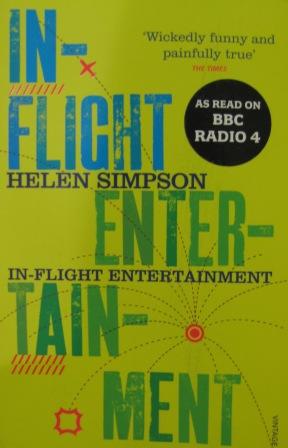
Time being in short supply is a bit of a theme for the latest book I've read, 'In-Flight Entertainment' by master short story writer Helen Simpson. This is the third book of Ms Simpson's short stories that I've read, after 'Hey Yeah Right Get a Life' and 'Dear George and Other Stories'. I first found out about her when I read the chilling 'Diary of an Interesting Year' in a weekend newspaper, a story which is included in this collection.
'In-Flight Entertainment' contains 15 short stories mostly connected by the theme of impending doom due to global warming and humanity's tendency to bury its head in the sand. The stories include 'Diary of an Interesting Year', a story of survival after environmental catastrophe, the claustrophobic 'In-Flight Entertainment', charting the shifting discomfort of an air passenger as he converses with a fellow traveller, 'Channel 17', which captures snapshots of the relationships of hotel occupants, and 'I'm Sorry But I'll Have to Let You Go', a tale of cold hearted idiocy.
I've got to be honest, I struggled a bit with this book. I bought it because I'd been intrigued by 'Diary of an Interesting Year' (which has lost none of its power. Since re-reading it, I've found myself trying to be a bit less wasteful and a bit more environmentally friendly as I go about my business. There's not many stories that have snuck into my psyche like that!) and wanted something small and portable to take with me to read at a wedding (well, not at the actual wedding, obviously, but at the hotels the night before and night afterwards. Given the chance, I'd probably have filled the bags with books, so this was my attempt at being practical! Anyway...). I still feel it's a bit patchy and I felt more engaged by some stories than others (I've still no idea about 'The Tipping Point') and, sadly, I feel that the theme of environmental catastrophe was clumsily handled at times. It felt shoe-horned in in places and I felt a bit nagged really.
Looking at it now, though, I've realised that I actually enjoyed a lot more of it than I realised at the time. Also, I feel that a second reading when I've got fewer distractions might mean less of it flies over my head. To paraphrase the classic line, it's not the book, it's me.
I liked that some of these stories were a bit of a departure from others that I've read, focussed on more than relationships. 'Diary of an Interesting Year' is almost Science Fiction, while 'The Festival of the Immortals' was almost fantasy (well, for a book worm anyway!).
On the whole, I'd say this is not the best Helen Simpson book to start with, but I would recommend her as a writer to anyone, although her usual themes are likely to appeal more to a female audience. This is her fifth collection, so there are four others to try first. I've only read two, so don't feel I can recommend one just yet, although at least one Tweeter (Alex Griffith/@jalexgriffith ) praised 'Constitutional' when I mentioned it on Twitter. Perhaps that's the one I will go for next, once I've got a few more titles off the list!
Time being in short supply is a bit of a theme for the latest book I've read, 'In-Flight Entertainment' by master short story writer Helen Simpson. This is the third book of Ms Simpson's short stories that I've read, after 'Hey Yeah Right Get a Life' and 'Dear George and Other Stories'. I first found out about her when I read the chilling 'Diary of an Interesting Year' in a weekend newspaper, a story which is included in this collection.
 |
| 'In-Flight Entertainment' by Helen Simpson (Vintage, 2011) |
I've got to be honest, I struggled a bit with this book. I bought it because I'd been intrigued by 'Diary of an Interesting Year' (which has lost none of its power. Since re-reading it, I've found myself trying to be a bit less wasteful and a bit more environmentally friendly as I go about my business. There's not many stories that have snuck into my psyche like that!) and wanted something small and portable to take with me to read at a wedding (well, not at the actual wedding, obviously, but at the hotels the night before and night afterwards. Given the chance, I'd probably have filled the bags with books, so this was my attempt at being practical! Anyway...). I still feel it's a bit patchy and I felt more engaged by some stories than others (I've still no idea about 'The Tipping Point') and, sadly, I feel that the theme of environmental catastrophe was clumsily handled at times. It felt shoe-horned in in places and I felt a bit nagged really.
Looking at it now, though, I've realised that I actually enjoyed a lot more of it than I realised at the time. Also, I feel that a second reading when I've got fewer distractions might mean less of it flies over my head. To paraphrase the classic line, it's not the book, it's me.
I liked that some of these stories were a bit of a departure from others that I've read, focussed on more than relationships. 'Diary of an Interesting Year' is almost Science Fiction, while 'The Festival of the Immortals' was almost fantasy (well, for a book worm anyway!).
On the whole, I'd say this is not the best Helen Simpson book to start with, but I would recommend her as a writer to anyone, although her usual themes are likely to appeal more to a female audience. This is her fifth collection, so there are four others to try first. I've only read two, so don't feel I can recommend one just yet, although at least one Tweeter (Alex Griffith/@jalexgriffith ) praised 'Constitutional' when I mentioned it on Twitter. Perhaps that's the one I will go for next, once I've got a few more titles off the list!
08 July 2012
Handle with Care
I've just finished reading 'Fragile Things', a collection of short stories and poems by one of my all time favourite writers, Neil Gaiman.
'Fragile Things' is an eclectic parcel of work which, typically for Gaiman, is hard to pigeon hole, even for the sake of review. Some stories verge on science fiction (e.g. the Holmesian 'A Study in Emerald' and 'Goliath', a story from the world of 'The Matrix'), while others are funny (such as 'Forbidden Brides of the Faceless Slaves in the Secret House of the Night of Dread Desire'). Some resemble classically eerie ghost tales (like 'October in the Chair' and 'Closing Time'), others disturbing crime stories (e.g. 'Keepsakes and Treasures' featuring the kind of influential characters I really hope don't exist in real life) and the nightmarishly frightening (including 'Feeders and Eaters' and 'The Flints of Memory Lane'. The former will definitely stay with me a long time, which is weird because it's creepy rather than horrific!). The collection ends with a novella called 'The Monarch of the Glen', a companion piece to Gaiman's fantastic novel 'American Gods', which draws upon Ancient Norse mythology and doesn't shy away from ratcheting up the tension!
Although I've not read any of his graphic novels, I have read and enjoyed all of Mr Gaiman's adult fiction and his last collection of shorts, 'Smoke and Mirrors'. To me, 'Fragile Things' felt a lot darker and more haunting than the other books I've read and made me wish I was all wrapped up in bed, safe and sound at times! Not that being creeped out by what I'm reading is a bad thing. In fact, it's arguably right on the Zeitgeist for a summer of perpetual rain, which feels more like November than July!
Overall, Mr Gaiman has once again successfully put his unique stamp on a range of niche genres here, delivering many stories which will stay with me for a very long time and for the right reasons. I'd recommend 'Fragile Things' as something for fans of Science Fiction, Horror and Gothic ghost stories to try, but I wouldn't guarantee that everyone will like every story or poem! Ultimately, it comes down to more than just genre - it's about the whole package, whether you like Mr Gaiman as a writer, his style and the way he thinks.
Gaiman fans will find much to enjoy here, although be careful you don't get caught out by the darker tone of this volume. The fact 'Fragile Things' is short fiction also means it's a great opportunity for genre fans to open it up and taking their pick of what's inside. Don't have nightmares now!
 |
| 'Fragile Things' by Neil Gaiman (Headline Review, 2006) |
Although I've not read any of his graphic novels, I have read and enjoyed all of Mr Gaiman's adult fiction and his last collection of shorts, 'Smoke and Mirrors'. To me, 'Fragile Things' felt a lot darker and more haunting than the other books I've read and made me wish I was all wrapped up in bed, safe and sound at times! Not that being creeped out by what I'm reading is a bad thing. In fact, it's arguably right on the Zeitgeist for a summer of perpetual rain, which feels more like November than July!
Overall, Mr Gaiman has once again successfully put his unique stamp on a range of niche genres here, delivering many stories which will stay with me for a very long time and for the right reasons. I'd recommend 'Fragile Things' as something for fans of Science Fiction, Horror and Gothic ghost stories to try, but I wouldn't guarantee that everyone will like every story or poem! Ultimately, it comes down to more than just genre - it's about the whole package, whether you like Mr Gaiman as a writer, his style and the way he thinks.
Gaiman fans will find much to enjoy here, although be careful you don't get caught out by the darker tone of this volume. The fact 'Fragile Things' is short fiction also means it's a great opportunity for genre fans to open it up and taking their pick of what's inside. Don't have nightmares now!
18 December 2011
Going Underground
I love a bit of sci-fi, particularly what Margaret Atwood calls 'Ustopian' stories (http://www.guardian.co.uk/books/2011/oct/14/margaret-atwood-road-to-ustopia), so when someone recommended 'The Machine Stops' by E. M. Forster, I immediately went online and bought a copy.
I read the Penguin Modern Classics version of 'The Machine Stops', which also includes 'The Celestial Omnibus'.
'The Machine Stops' tells the story of an Earth where the everyday needs of human beings are provided for by The Machine, an omnipresent piece of technology. Everyone lives in hexagonal rooms underground, able to summon whatever they need by pushing one of a myriad of buttons on the walls. Humans become more and more reliant on The Machine, becoming lazier and lazier until they rarely leave their cells and value recycled films the over first hand experience of the Earth's surface their ancestors knew so well.
Like the very best Ustopian stories, 'The Machine Stops' shows great foresight. I was surprised to find out that it was originally published in 1909. It just goes to show that concerns about our reliance on technology have been around for almost as long as the technology itself.
Although I found the idea interesting, I found the writing a bit plodding. It felt a little like a writing exercise that someone had decided to publish rather than a fully-fledged story, which was a bit of a shame. However, it feels very much like a story ripe for reformation and reinterpretation in other media. The climax could make a great horror film.
The second story, 'The Celestial Omnibus', had an equally dark, but much less plodding style. It tackles literary snobbery by contrasting an enthusiastic young boy taking his first steps into literature with an older man, who reads to show off. In an almost fairy tale style, 'The Celestial Omnibus' tells the story of what happens when the boy investigates a sign pointing 'To Heaven' that seems to point to a dead end alleyway.
I would actually recommend these stories as thought provokers, but think it would be better to read them in other editions including a bit more background information. They've certainly intrigued me enough that I want to try some more Forster, so there's another name to add to the list!
I read the Penguin Modern Classics version of 'The Machine Stops', which also includes 'The Celestial Omnibus'.
'The Machine Stops' tells the story of an Earth where the everyday needs of human beings are provided for by The Machine, an omnipresent piece of technology. Everyone lives in hexagonal rooms underground, able to summon whatever they need by pushing one of a myriad of buttons on the walls. Humans become more and more reliant on The Machine, becoming lazier and lazier until they rarely leave their cells and value recycled films the over first hand experience of the Earth's surface their ancestors knew so well.
 |
| 'The Machine Stops' by E. M. Forster (Penguin Modern Classics, 2011) |
Like the very best Ustopian stories, 'The Machine Stops' shows great foresight. I was surprised to find out that it was originally published in 1909. It just goes to show that concerns about our reliance on technology have been around for almost as long as the technology itself.
Although I found the idea interesting, I found the writing a bit plodding. It felt a little like a writing exercise that someone had decided to publish rather than a fully-fledged story, which was a bit of a shame. However, it feels very much like a story ripe for reformation and reinterpretation in other media. The climax could make a great horror film.
The second story, 'The Celestial Omnibus', had an equally dark, but much less plodding style. It tackles literary snobbery by contrasting an enthusiastic young boy taking his first steps into literature with an older man, who reads to show off. In an almost fairy tale style, 'The Celestial Omnibus' tells the story of what happens when the boy investigates a sign pointing 'To Heaven' that seems to point to a dead end alleyway.
I would actually recommend these stories as thought provokers, but think it would be better to read them in other editions including a bit more background information. They've certainly intrigued me enough that I want to try some more Forster, so there's another name to add to the list!
15 July 2011
Beaten by Hemingway!
Hasn't been a good week for the quest really. If you've been following me on Twitter (@Girl_LovesBooks), you'll know that I decided to take on a book of Ernest Hemingway short stories, 'The Snows of Kilimanjaro'. I love short stories and tales of exotic and interesting places, so this, combined with Hemingway's excellent reputation, made me think it was a good bet for me.
Unfortunately, as early as page six, I really wasn't doing very well with it at all. It wasn't engaging me and the story wasn't even sinking in, so that I wasn't able to recount anything that happened after I'd read about it. It was also taking me a horribly long time to get through, which wasn't very helpful when I have so much to get through! By page ten, I'd decided to give up on the first story and try the second, but pretty much the same thing happened.
I'm incredibly disappointed to have completely failed on this one, particularly with such a reputable writer. I usually have a rule about finishing the first couple of chapters of something before I decide whether to keep going or not, but I didn't even manage to do that this time round. The shame!
I'm happy to say, though, that there aren't that many books that I haven't managed to finish. Off the top of my head, the only ones I can think of are 'Jennie' by Paul Gallico (quite liked it, but found it lacked enough pace to keep me interested), 'Ratcatcher' by James McGee (From what I remember, even though I love this sort of historical fiction, I felt is was a bit too cliched for me sadly) and 'The Gallow's Curse' by Karen Maitland (again, I just didn't connect with the story and unfortunately it became a drag for me to read). I also found 'The Anatomy of Ghosts' by Andrew Taylor hard going, but I did get through it. It was a good story, but again lacked pace in places.
The fact I've not finished any of these books is certainly no reflection on their quality though. I find there are a lot of things which influence what I read, ranging from mood to time of year, never mind the quality of the book or the writing! I've always found Philippa Gregory's work to be hard to get into, but once you've orientated yourself to the time, place and key characters, the books are fantastic and I consider her one of my favourite authors. Daphne Du Maurier can be difficult sometimes too. It took me three or four attempts to read 'The King's General', but I'm extremely glad I did it in the end.
So, for the first time I'm crossing a title off my list that I haven't managed to read. With 474 books to go, I'm sure it won't be the last time this happens either. I think I'll go for a safer bet next time to cheer me up. Have narrowed it down to six already...
 |
| 'The Snows of Kilmanjaro' by Ernest Hemingway (2004 Vintage Classics) |
I'm incredibly disappointed to have completely failed on this one, particularly with such a reputable writer. I usually have a rule about finishing the first couple of chapters of something before I decide whether to keep going or not, but I didn't even manage to do that this time round. The shame!
I'm happy to say, though, that there aren't that many books that I haven't managed to finish. Off the top of my head, the only ones I can think of are 'Jennie' by Paul Gallico (quite liked it, but found it lacked enough pace to keep me interested), 'Ratcatcher' by James McGee (From what I remember, even though I love this sort of historical fiction, I felt is was a bit too cliched for me sadly) and 'The Gallow's Curse' by Karen Maitland (again, I just didn't connect with the story and unfortunately it became a drag for me to read). I also found 'The Anatomy of Ghosts' by Andrew Taylor hard going, but I did get through it. It was a good story, but again lacked pace in places.
The fact I've not finished any of these books is certainly no reflection on their quality though. I find there are a lot of things which influence what I read, ranging from mood to time of year, never mind the quality of the book or the writing! I've always found Philippa Gregory's work to be hard to get into, but once you've orientated yourself to the time, place and key characters, the books are fantastic and I consider her one of my favourite authors. Daphne Du Maurier can be difficult sometimes too. It took me three or four attempts to read 'The King's General', but I'm extremely glad I did it in the end.
So, for the first time I'm crossing a title off my list that I haven't managed to read. With 474 books to go, I'm sure it won't be the last time this happens either. I think I'll go for a safer bet next time to cheer me up. Have narrowed it down to six already...
02 July 2011
Either this Wallpaper goes or I do...
I've just finished a Dover Thrift collection of six short stories by Charlotte Perkins Gilman, 'The Yellow Wallpaper and Other Stories'. I bought it because my class read 'The Yellow Wallpaper' at school and now I'm older, I wanted to re-read it.
This collection includes six stories, all published between 1892 and 1914 and all unexpectedly relevant and modern in their message. I think my favourites were 'Making a Change', the story of a young family cracking under the strain of a grumpy new baby, and 'Mr Peeble's Heart', about a dutiful husband who finally does something for himself. BUT my very favourite was 'Three Thanksgivings', the story of a widow standing on her own two feet despite the protestations of her own selfish, adult children and a predatory money lender.
Considering how long ago these stories were written, it's amazing how modern the voice used is and how relevant the issues and situations still are. Gilman is a feminist writer, so she's highlighting and exploring relationships in a way that was unusual pre-Great War and it's very refreshing. But don't let that put you off. Unlike many feminist writers, there is a lot of humour in what Gilman writes. She uses a lot of wit to make her points and the stories are much the better for it. After all, no one likes being preached at!
Overall, I'm so glad I read this book. It wasn't at all what I expected and I can't wait to read more of Gilman's work. It's another pleasant surprise among the many pleasant surprises that I'm having on this quest! Let's hope it's not the last!
 |
| 'The Yellow Wallpaper and Other Stories' by Charlotte Perkins Gilman (Dover Thrift Edition, 1997) |
Considering how long ago these stories were written, it's amazing how modern the voice used is and how relevant the issues and situations still are. Gilman is a feminist writer, so she's highlighting and exploring relationships in a way that was unusual pre-Great War and it's very refreshing. But don't let that put you off. Unlike many feminist writers, there is a lot of humour in what Gilman writes. She uses a lot of wit to make her points and the stories are much the better for it. After all, no one likes being preached at!
Overall, I'm so glad I read this book. It wasn't at all what I expected and I can't wait to read more of Gilman's work. It's another pleasant surprise among the many pleasant surprises that I'm having on this quest! Let's hope it's not the last!
06 June 2011
Little Beauties
Ok, I've been mulling this over for a few days now and I've given up. I've finished reading 'The Doll', a recently published collection of rediscovered Daphne Du Maurier short stories and I've tried to find a funny or clever way to say what I think of it, but, to be brutally honest, I don't think there is one. So here goes. I absolutely loved this book.
I've been gradually working my way through Du Maurier's books for a few years now and, assuming this project goes to plan, quite a few more will eventually feature in this blog. I don't like to rush it when I find an author I like who has passed away, I work on the theory that they won't be producing anything new any time soon, so it's better to savour each work one at a time rather than gobbling them up and getting cognitive indigestion. Du Maurier's work has been described as 'Romantic Gothic' and, so far, I've got to admit I've preferred her when she's being more Gothic than Romantic. That's probably why I found 'Frenchman's Creek' a bit dull, but loved 'The King's General' and, of course, 'Rebecca'.
If, unlike me, you prefer the wild, romantic Du Maurier, then you probably won't get as much enjoyment out of 'The Doll' as I did. This is a collection of some of her earlier, 'lost' short stories published in her early twenties and you can feel the influence of earlier gothic novelists, such as the Brontes, throughout. Every story is a well observed, reflective exploration of often warped or dying relationships and unpleasant identities. There's an amoral vicar, men who get what they want then leave the women they loved behind, selfish social climbers who don't realise they're selfish social climbers, people who react to every 'sign' when making decisions and those who ignore even the most obvious ones.
This is also a fascinating collection because you get the feeling that Du Maurier was finding her voice when writing these stories. She tries different perspectives, styles and narrative devices, making this a real must-read for anyone interested in creative writing or English Literature.
Really, my only niggle is that I felt the collection was named after perhaps its weakest inclusion. Although the idea behind 'The Doll' was interesting, I felt that it really wasn't the best of the stories included here and was perhaps only included because of its rather ambiguous plot and the fact it features a young man obsessed with a girl called Rebecca. Certainly, this story won't be the reason I re-read the book again in the future.
Now my enthusiasm has been restored after the moderate disappointment of 'Frenchman's Creek', I can't wait to get back to some Du Maurier later in the year. Just as well really, I've got another 17 of her other books to go!
 |
| 'The Doll: Short Stories' by Daphne Du Maurier (Published 2011 by Virago Press) |
If, unlike me, you prefer the wild, romantic Du Maurier, then you probably won't get as much enjoyment out of 'The Doll' as I did. This is a collection of some of her earlier, 'lost' short stories published in her early twenties and you can feel the influence of earlier gothic novelists, such as the Brontes, throughout. Every story is a well observed, reflective exploration of often warped or dying relationships and unpleasant identities. There's an amoral vicar, men who get what they want then leave the women they loved behind, selfish social climbers who don't realise they're selfish social climbers, people who react to every 'sign' when making decisions and those who ignore even the most obvious ones.
This is also a fascinating collection because you get the feeling that Du Maurier was finding her voice when writing these stories. She tries different perspectives, styles and narrative devices, making this a real must-read for anyone interested in creative writing or English Literature.
Really, my only niggle is that I felt the collection was named after perhaps its weakest inclusion. Although the idea behind 'The Doll' was interesting, I felt that it really wasn't the best of the stories included here and was perhaps only included because of its rather ambiguous plot and the fact it features a young man obsessed with a girl called Rebecca. Certainly, this story won't be the reason I re-read the book again in the future.
Now my enthusiasm has been restored after the moderate disappointment of 'Frenchman's Creek', I can't wait to get back to some Du Maurier later in the year. Just as well really, I've got another 17 of her other books to go!
24 May 2011
Voices from Beyond the Grave...
It's not my fault. Personally, I blame Daphne Du Maurier. Although I can't, of course, because she died in 1989, so I guess it must be someone else's fault after all. Anyway, the long and the short of it is that I've cracked and bought another book. I've been trying to stick to a 'two-out-one-in' rule (because sometimes life's so miserable that some retail therapy is a vital necessity), but once I knew a new collection of Du Maurier short stories had been published, I couldn't really help myself. It's amazing really that she's still managing to produce work even though she's been dead 22 years, but it just goes to show how darn talented she is!
Subscribe to:
Posts (Atom)