Ah, 2012! A great year for distractions, not such a good one for reading! Although, having said that, I did spend a few hours reading 'The Somnambulist' rather than watching the sailing on a big screen on Weymouth beach, so perhaps I can't really blame the Olympics or Jubilee!
2012 really didn't start well for my project. One book in two months? TWO MONTHS? And a book of short stories at that?! I'm pretty sure it wasn't the fault of R, Murray Gilchrist, author of 'A Night on the Moor and Other Tales of Dread', or his stories. As usual, I'd bitten off more than I could chew with a training course, lots on at work and a number of other factors too tedious to go into. June was equally unsuccessful, because my friends had the audacity to keep getting married or having children. I didn't want to chance chucking a hardback at the married couple rather than confetti, so decided not to try to multitask that month!
Fortunately, for the rest of the year (nine months) I made my target of at least two books a month. This totalled 21 volumes in all, excluding the three books I gave up on (sorry Ms. Austen!), which brings it up to 24. OK, it's not quite the 30 books I managed in 2011, but it's still progress. Slow progress, but progress nonetheless!
I've read quite a selection of books this year, so I hope you've all found something of interest to you. The books included modern classics, science fiction, horror, humour, literary fiction, historical fiction (surprise, surprise!), short stories (ditto!) and non-fiction. There have been quite a few new books in there this year, including the lovely 'The Unlikely Pilgrimage of Harold Fry' and enchanting 'Laura Lamont's Life in Pictures'. Although I don't regret reading them for one moment, trying to be less distracted by new releases will have to be a resolution for 2013, otherwise I'll never empty my shelves!
My big regret for 2012 is that I didn't take advantage of various celebrations, anniversaries or film releases to spur me on. 'We Bought a Zoo' came out on DVD, while 'The Woman in Black', 'Anna Karenina' and 'Life of Pi' arrived at cinemas. There is still hope yet, though. While 2012 was the 50th anniversary of the first James Bond film, 'Doctor No', 2013 is the 60th anniversary of the first Bond book, 'Casino Royale'. Sounds like a good opportunity to me!
On the whole, I think this has been an OK year, but I definitely want 2013 to be better. A minimum of two books a months seems manageable, so I think I'll stick to that for the time being, but I must make sure the acquisitions stay under control too! I think I would like to read more classics in next year (I have my eye on 'Jane Eyre', 'Tess of the D'Urbervilles' and 'Anna Karenina') and more non-fiction (I've got a few history books waiting for me). Although I don't want my love of historical fiction to take over, it would be great if I could finish at least one series of books. I'm part way through Jean Plaidy's Tudor novels, Bernard Cornwell's King Alfred books and Winston Graham's Poldark stories.
I sincerely hope that you've enjoyed reading my blog as much as I've enjoyed writing it. I always try to be honest and fair in my opinions and respectful of the authors whose work I read, which I hope comes across.
Until next time, I'd like to wish you all a very happy new year and the very best for 2013! I hope you'll join me again soon!
2012: The Year in Books
January
'A Night on the Moor' by R.Murray Gilchrist
March
'QI Book of General Ignorance'
'The Virgin's Lover' by Philippa Gregory
April
'The Help' by Kathryn Stockett
'The Psychopath Test' by Jon Ronson
May
'Miss Pettigrew Lives for a Day' by Winifred Watson
'Weird Things Customers Say in Bookshops' by Jen Campbell
'Notes on a Scandal' by Zoe Heller
July
'Fragile Things' by Neil Gaiman
'The Great Gatsby' by F. Scott Fitzgerald
August
'The Somnambulist' by Essie Fox
'The Day of the Triffids' by John Wyndham
September
'The Unlikely Pilgrimage of Harold Fry' by Rachel Joyce
'In-Flight Entertainment' by Helen Simpson
October
'Laura Lamont's Life in Pictures' by Emma Straub
'Bob Servant: Hero of Dundee' by Neil Forsythe
'Sword Song' by Bernard Cornwell
November
'How to be a Woman' by Caitlin Moran
'Legend of Sleepy Hollow' by Washington Irving
December
'Little Boy Lost' by Marghanita Laski
'The Good Man Jesus and the Scoundrel Christ' by Philip Pullman
31 December 2012
23 December 2012
The Good, The Bad, or The Ugly?
I've just finished reading 'The Good Man Jesus and the Scoundrel Christ' by Philip Pullman, one of the Canongate Myth series of books through which authors re-imagine stories from various cultures. Unfortunately, I didn't know this when I started reading!
'The Good Man Jesus and the Scoundrel Christ' begins with the idea that not one but two babies were born to Mary in the Bethlehem stable. While Jesus begins as a mischievous child who grows into a passionate believer and inspirational cult leader, Christ is steeped in scripture and idealises the politics and hierarchy of organised religion. After an argument about the best way to bring about God's kingdom, Jesus and Christ go their separate ways, although their lives are irrevocably entwined. As Jesus's following grows, Christ becomes his biographer and, under the influence of an unnamed stranger, is eventually responsible for turning the man into a legend.
This book wasn't really what I expected. I didn't know that this was part of a series of re-written myths beforehand and, knowing a little about Mr Pullman and his previous work, I expected this novel to be more polemical and rooted in reality, particularly as the title seemed so provocative. In truth, 'The Good Man Jesus and the Scoundrel Christ' is much more about the power of storytelling and an exploration of myth-making than a comment on religion or Christianity.
As an alternative history, the story was OK. The style was interesting and well pitched, bringing back childhood memories of reading Ladybird Bible stories. At times is was so convincing I forgot I was reading a parody! If you're reading the book as a myth, this is a great strength, but if you're expecting some more realistic twist on the tale, it feels a bit like a case of Stockholm Syndrome.
Because I was looking for thought-provoking ideas and opinions, I felt the most interesting moments were when the characters soliloquised about their faith, expressing doubts and worrying about the consequences of their actions and myth-making. Unfortunately for me, these moments were few and quite late on in the book.
Overall, I found 'The Good Man Jesus and the Scoundrel Christ' a bit disappointing, but think this is because I was approaching it from the wrong angle. It's title and provenance suggested to me a book which gave a new perspective on religious faith, which it clearly isn't. If you're interested in alternative histories, however, this is a well-written, considered piece that may be of interest to you, although it probably won't knock your sandals off.
Now let's see if we can make this month three in a row!
As an alternative history, the story was OK. The style was interesting and well pitched, bringing back childhood memories of reading Ladybird Bible stories. At times is was so convincing I forgot I was reading a parody! If you're reading the book as a myth, this is a great strength, but if you're expecting some more realistic twist on the tale, it feels a bit like a case of Stockholm Syndrome.
Because I was looking for thought-provoking ideas and opinions, I felt the most interesting moments were when the characters soliloquised about their faith, expressing doubts and worrying about the consequences of their actions and myth-making. Unfortunately for me, these moments were few and quite late on in the book.
Overall, I found 'The Good Man Jesus and the Scoundrel Christ' a bit disappointing, but think this is because I was approaching it from the wrong angle. It's title and provenance suggested to me a book which gave a new perspective on religious faith, which it clearly isn't. If you're interested in alternative histories, however, this is a well-written, considered piece that may be of interest to you, although it probably won't knock your sandals off.
Now let's see if we can make this month three in a row!

13 December 2012
Lost Properly?
I've just finished 'Little Boy Lost' by Marghanita Laski, one of Persephone Books' rediscovered 20th century classics. How this gem of a novel remained buried until the early 2000s, I'll never know!
After the death of his Parisian wife in occupied France, English poet Hilary Wainwright is content to believe that his baby son perished with her. But when an unexpected guest arrives with news that the child may still be alive, Hilary suddenly finds himself duty-bound to begin searching for his son. Returning to France after the war, he reluctantly follows a trail through the corrupt and abused country, until he meets a little boy in a poor orphanage 50 miles from Paris. Every day for a week, he gets to know the child, Jean, but remains torn between his selfish desire for intellectual solitude and his need to love and be loved.
'Little Boy Lost' is a beautifully crafted, well observed analysis of Hilary, a complicated man caught between his desire to secrete himself away in an intellectual ivory tower and properly grieve for his lost wife and son. He's not particularly likeable, but he is a realistic, contradictory human being. As a result, tension is created not just by the will-he-won't-he search for the lost little boy, but also by whether Hilary is actually likely to make a good enough father.
His potential son Jean absolutely broke my heart. I know I'm a big softy, but I was so affected by this story that I cried my eyes out over this fictional child. I think this was the result of the post-war setting; there are probably children like Jean left homeless and lost after every conflict and this tale deftly reminds the reader of the innocent and often lifelong victims of war.
Overall, 'Little Boy Lost' is an absolute emotional rollercoaster which forces you to keep reading in the hope everything would turn out well, but never gives the slightest reassurance that it could. Right until the final pages, I had no idea which way it would go and whether the rug would be pulled out from under me and my hopes dashed. Having built up the tension over 219 pages, in the end the writer breaks it perfectly in just one line.
It may not be a cheery ride, but I would thoroughly recommend this book. It's extremely well written, features interesting and complex characters and is a real lesson in suspense. I can't wait to read more by the author and find out what other treasures have been unearthed by the clever people at Persephone Books!
 |
| 'Little Boy Lost' by Marghanita Laski (Persephone Books, 2001) |
'Little Boy Lost' is a beautifully crafted, well observed analysis of Hilary, a complicated man caught between his desire to secrete himself away in an intellectual ivory tower and properly grieve for his lost wife and son. He's not particularly likeable, but he is a realistic, contradictory human being. As a result, tension is created not just by the will-he-won't-he search for the lost little boy, but also by whether Hilary is actually likely to make a good enough father.
His potential son Jean absolutely broke my heart. I know I'm a big softy, but I was so affected by this story that I cried my eyes out over this fictional child. I think this was the result of the post-war setting; there are probably children like Jean left homeless and lost after every conflict and this tale deftly reminds the reader of the innocent and often lifelong victims of war.
Overall, 'Little Boy Lost' is an absolute emotional rollercoaster which forces you to keep reading in the hope everything would turn out well, but never gives the slightest reassurance that it could. Right until the final pages, I had no idea which way it would go and whether the rug would be pulled out from under me and my hopes dashed. Having built up the tension over 219 pages, in the end the writer breaks it perfectly in just one line.
It may not be a cheery ride, but I would thoroughly recommend this book. It's extremely well written, features interesting and complex characters and is a real lesson in suspense. I can't wait to read more by the author and find out what other treasures have been unearthed by the clever people at Persephone Books!
24 November 2012
Getting A Head
I've just finished reading 'The Legend of Sleepy Hollow' by Washington Irving on Kindle, an appropriate story for this time of year and the sort of weather we've been having this week!
'The Legend of Sleepy Hollow' is a short story set in New England in the 1800s. Sleepy Hollow is an idyllic rural area where the Dutch settlers enjoy nothing more than a night swapping 'true' ghost stories on the porch after a good meal. Into their company comes Ichabod Crane, the school master employed by the community to teach the local boys. The geeky dreamer takes a shine to heiress Katrina Van Tassell, much to the annoyance of her beau, the mischievous Abraham Van Brunt. After an evening of spooky tales and rejection by the flirtatious beauty, Crane begins the lonely journey home, only to end up riding into legend.
I've wanted to read this story for an awfully long time. Ever since I can remember, it's come up in all sorts of programmes and movies I've watched, from Scooby Doo to the 1999 Johnny Depp/Tim Burton film. After seeing how it permeated American culture, I wanted to know what had inspired them so in the original.
To be honest, I think the key word here is culture. Just as it's hard to say why British stories such as the Loch Ness Monster or Beast of Bodmin Moor have caught the public imagination, I'm a bit perplexed as to why this story has seemed to me to be everywhere!
'The Legend of Sleepy Hollow' is an OK story, with some excellently observed descriptions of the American countryside, but it's the latter that make it worth a read rather than the former. Perhaps the reason it's had such longevity is its simplicity - it makes it endlessly adaptable and possible to build a number of plots around the basic relationships of the key players.
'The Legend of Sleepy Hollow' is a good, quick read for a classic dark, chilly winter's night, but don't expect to have nightmares or even find yourself spooked by something glimpsed from the corner of your eye. Unless of course you spend a lot of time walking through forests in the dark.
Right then, what next?
'The Legend of Sleepy Hollow' is a short story set in New England in the 1800s. Sleepy Hollow is an idyllic rural area where the Dutch settlers enjoy nothing more than a night swapping 'true' ghost stories on the porch after a good meal. Into their company comes Ichabod Crane, the school master employed by the community to teach the local boys. The geeky dreamer takes a shine to heiress Katrina Van Tassell, much to the annoyance of her beau, the mischievous Abraham Van Brunt. After an evening of spooky tales and rejection by the flirtatious beauty, Crane begins the lonely journey home, only to end up riding into legend.
I've wanted to read this story for an awfully long time. Ever since I can remember, it's come up in all sorts of programmes and movies I've watched, from Scooby Doo to the 1999 Johnny Depp/Tim Burton film. After seeing how it permeated American culture, I wanted to know what had inspired them so in the original.
To be honest, I think the key word here is culture. Just as it's hard to say why British stories such as the Loch Ness Monster or Beast of Bodmin Moor have caught the public imagination, I'm a bit perplexed as to why this story has seemed to me to be everywhere!
'The Legend of Sleepy Hollow' is an OK story, with some excellently observed descriptions of the American countryside, but it's the latter that make it worth a read rather than the former. Perhaps the reason it's had such longevity is its simplicity - it makes it endlessly adaptable and possible to build a number of plots around the basic relationships of the key players.
'The Legend of Sleepy Hollow' is a good, quick read for a classic dark, chilly winter's night, but don't expect to have nightmares or even find yourself spooked by something glimpsed from the corner of your eye. Unless of course you spend a lot of time walking through forests in the dark.
Right then, what next?
16 November 2012
Feminism goes Funny
I've just finished reading 'How to be a Woman' by Caitlin Moran. I bought it after hearing her on BBC Radio Four's 'Chain Reaction' and was so intrigued by what she said that I wanted to know more.
'How to be a Woman' is a funny, rude, mischievousness, cheeky, honest, realistic, thought provoking, passionate romp through what it means to be a modern woman. Part-autobiography, part feminist rant, it begins with a chilling account of Moran being pursued by a gang of boys as a 13 year old, following her through puberty, then into her first relationships, motherhood and her reflections on what feminism means today.
This book is laugh out loud funny thanks to the author's gloriously irreverent style. The prose rollicks along shamelessly peeping into every nook and cranny of what it's like to grow up as a white, western female of the species before delving into the specific life experiences of the writer. Reading it made me remember things I'd long forgotten and made me marvel at how different we all are as teenagers.
Despite its humour, it is a quite serious book because it does something ordinary women don't do; it makes readers face up to the fact that girls do some pretty potty things that boys simply aren't expected to. Moran talks about many things that have been irritating me for years, but I've always felt like I'm the odd one out for suspecting that there's anything amiss. It's such a relief to find I'm not the only one who thinks the way we behave sometimes is utterly bonkers and distracts us from the more important achievements in life that might get more women in the boardroom or in Parliament.
This is not a book for everyone, however. There is an awful lot of swearing used, which some people may dislike, along with references to heavy drinking and drug taking, which may also cause disapproval.
But I really identified with Moran's arguments and wish there were a few more people willing to pipe up and say that, actually, society's expectations of women are a bit out of order. It's not enough to be clever, talented, generous and rich, women also feel they have to be beautiful, thin, fashionable and popular. Despite hope spread by modern day icons such as Lady Gaga, the princess ideal still lives in showy weddings and WAGs.
I have two hopes as a result of reading this book. 1) That Moran will revisit it when her daughters are older and see how her experiences compare with theirs and how things have changed since she was their age. 2) That someone will write 'How to be a Man' so we can hear the other side of the story. There's part of me that suspects that a lot of men think what we do is bonkers too. Worse still, I think a few of them are also getting sucked into bad habits like worrying about body image too.
Right, back to the shelves!
'How to be a Woman' is a funny, rude, mischievousness, cheeky, honest, realistic, thought provoking, passionate romp through what it means to be a modern woman. Part-autobiography, part feminist rant, it begins with a chilling account of Moran being pursued by a gang of boys as a 13 year old, following her through puberty, then into her first relationships, motherhood and her reflections on what feminism means today.
This book is laugh out loud funny thanks to the author's gloriously irreverent style. The prose rollicks along shamelessly peeping into every nook and cranny of what it's like to grow up as a white, western female of the species before delving into the specific life experiences of the writer. Reading it made me remember things I'd long forgotten and made me marvel at how different we all are as teenagers.
Despite its humour, it is a quite serious book because it does something ordinary women don't do; it makes readers face up to the fact that girls do some pretty potty things that boys simply aren't expected to. Moran talks about many things that have been irritating me for years, but I've always felt like I'm the odd one out for suspecting that there's anything amiss. It's such a relief to find I'm not the only one who thinks the way we behave sometimes is utterly bonkers and distracts us from the more important achievements in life that might get more women in the boardroom or in Parliament.
This is not a book for everyone, however. There is an awful lot of swearing used, which some people may dislike, along with references to heavy drinking and drug taking, which may also cause disapproval.
But I really identified with Moran's arguments and wish there were a few more people willing to pipe up and say that, actually, society's expectations of women are a bit out of order. It's not enough to be clever, talented, generous and rich, women also feel they have to be beautiful, thin, fashionable and popular. Despite hope spread by modern day icons such as Lady Gaga, the princess ideal still lives in showy weddings and WAGs.
I have two hopes as a result of reading this book. 1) That Moran will revisit it when her daughters are older and see how her experiences compare with theirs and how things have changed since she was their age. 2) That someone will write 'How to be a Man' so we can hear the other side of the story. There's part of me that suspects that a lot of men think what we do is bonkers too. Worse still, I think a few of them are also getting sucked into bad habits like worrying about body image too.
Right, back to the shelves!
11 November 2012
Previously from The Girl Who Loves Books...
Quite surprisingly, I'm taking longer than expected to finish 'How to be Woman' by Caitlin Moran, so I thought you might like to see a few of my pre-blog reviews, written before I realised I had quite so much to read! Enjoy and I hope to have something new for you soon!
'My Wicked, Wicked Ways' by Errol Flynn
When I found out about this book, I knew I had to read it. I've loved the films of Errol Flynn ever since I was a child. His movies took me on exciting adventures in exotic lands beyond my innocent imagination and instilled in me a love of adventure stories which I have carried into adulthood. This book, the story of his life, is possibly the greatest adventure story of them all. Beginning with Flynn's youth in Tasmania, Australia, we follow him to gold mines and plantations in New Guinea, casinos and brothels of South East Asia, the highs and lows of the down-and-out life in Sydney and Queensland, his early acting career in England and finally to the glitz of Hollywood and the exoticism of Jamaica. In these pages we encounter angry native tribes, sharks and crocodiles, con tricks and diamond smuggling, high profile court cases and tempestuous relationships. But, surprisingly, we also find reflection and philosophy. According to the introduction by Jeffrey Meyers, this book was written to be scandalous, but the charm of the subject wins through. Although I approached the book determined to take it with a pinch of salt and not be seduced, 438 pages later I was more fascinated by Flynn than ever. However, I did feel that there was something missing. The story felt incomplete without photographs and an epilogue explaining what happened to Flynn and the key characters in his life. But that might just be me being greedy. Overall, this book spans fifty years of adventure, mischief and excitement and is well worth a read by any armchair explorer or devotee of Hollywood.
'Frenchman's Creek' by Daphne Du Maurier
Despite being a work of fiction, this book feels as though it tells a real-life tale of the author's personal feelings of isolation and longing. Set in the reign of Charles II, `Frenchman's Creek' tells the story of the restless and unhappy Lady Dona St Columb, who flees London after playing a practical joke on an unfortunate countess, egged on by the rake Rockingham. Feeling guilty about what she has done and unhappy at what her life has become, she seeks isolation at her husband's Cornish estate and finds joy in the simple pleasures of playing with her children and exploring the coast. On one such walk, she encounters a French pirate, Jean Aubrey, and her life takes an unexpected turn... Du Maurier wrote this book while in Langley End, Hertfordshire, away from the wild Cornish landscape which she loved, perhaps inspiring Dona's sense of longing in the story. Also, according to Sheila Hodges, Du Maurier's editor, Dona carries many of the authors own feelings about wanting to be a boy, the Cornish countryside and her passion for freedom (P. 30, the Daphne Du Maurier Companion, Ed. Helen Taylor). This was certainly the feeling I got while reading the book. Unfortunately, this view of the female experience has become a bit of a cliché in recent years and as a modern feminist, it made me a bit uncomfortable. I stuck with the book, however, and am glad that I did because the pace and adventure quickens as the story progresses, leading to a satisfying ending. Although I don't feel this is Du Maurier's best work and wouldn't recommend it to a first time reader (unless in their mid-teens!), it was enjoyable and should be accepted for what it is - a bit of romantic escapism.
'The Turn of the Screw' by Henry James
This book was one of the most difficult, irritating and intriguing things I have ever read. This novella is usually described as a classic ghost story. It tells the story of a vulnerable young woman who takes the position of governess at an Essex country house called Bly. She is to look after two angelic, orphaned children, a boy, Miles, and a girl, Flora, with the help of the housekeeper, Mrs Grose. After a letter arrives announcing Miles' expulsion from school, the unfortunate governess begins to doubt that all is as it should be with the children and starts to see signs of a supernatural cause.
This story was written in 1898, but, unlike other novels of the period, its language and style have not aged well. At some points I found it almost incomprehensible and had to read and reread some pages three or four times to get any meaning from them whatsoever. I am not entirely sure whether the style reflected the time or whether the writer was trying to imply something with the overly complex and repetitive writing of the governess. What I do know is that you should never judge a book by its thickness and assume you will finish it quickly.
Underneath the leaden prose, the themes of the book were consistent and the story is interesting. It challenged the reader to decide whether the governess was genuinely threatened or whether she was mad and does make you think.
Mad or not, I found it hard to like the governess, though I recognised the stubbornness of someone in their late teens/early twenties who is determined to show that they can do things without help. I found myself wondering why she did not speak to the local priest if the threat was supernatural. And why, after the disturbing end to the book, was she still able to work as a governess? The latter certainly just did not make sense to me.
Overall, I would say this is a challenging read, partly because its language is so complex, partly because it behaves like a puzzle with multiple solutions. Either way, it will certainly haunt the reader long after the last page is finished.
'Interview with the Vampire' by Anne Rice
It's been over a week since I finished this book and I still don't feel like I have a handle on it. Normally a couple of days is all I need to digest a volume and start to make connections that I hadn't noticed straight away. This time, however, despite being trapped in 200-odd pages of firmly printed text, I'm finding this tale as enigmatic and hard to pin down as any vampire.
`Interview with the Vampire' begins with the brilliant conceit of a young man tape-recording an interview with Louis, a two-hundred year old vampire. Louis tells the story of his life and loves, starting in New Orleans with how he met and was transformed by the self-serving Lestat. Tormented by his inherent evil but driven by his hunger for human blood, Louis attacks a young girl, Claudia, in the back streets of the city. In a complex act of cruelty and desperation, Lestat also makes Claudia a vampire, establishing the characters as the strangest of families. The story explores the relationships that these three vampires have with each other and with themselves, visiting some very dark places and sometimes taking the reader to places they never sought to go.
I neither liked nor disliked this book, but I was certainly intrigued by it. Louis philosophical ponderings on what being a vampire means offered a genuinely different perspective on a myth that permeates modern culture. However, I can see why it has retained its cult status in the last 40 years. The more brutal, visceral and sexual aspects of the vampire's existence, along with the subtle hints at what could be construed as paedophilia, could be alienating for some audiences. For me, they just sat awkwardly with what I found newer and more interesting, the more thoughtful start to the book. It's probably important however that we don't forget that vampires are supposed to be human predators rather than the damaged pretty boys so often seen on screen today.
Overall, although I'm not sure I would recommend this novel to anyone, it captured my interest enough to make me want to read the sequel, `The Vampire Lestat'. Hopefully this will be less ambiguous than its predecessor.
'Dear George and Other Stories' by Helen Simpson
I `discovered' Helen Simpson a few weeks ago when one of her short stories appeared in the Guardian magazine. It so completely blew me away that I immediately started to track down her other books and stories.
`Dear George' is a collection of short stories which explore various themes including pregnancy, child rearing and family discord, mainly from the female perspective. There is a petulant teenager who is caught out by an act of kindness, a desperate and overdue pregnant woman, a mother who finds family life to be unlike she expected and a nasty surprise for a authoritarian father on Christmas day.
There is a strange magic to these stories. Simpson deftly waves her pen and creates relationships and situations which are both realistic and recognisable, but without the reams of prose required by many authors. It's refreshing and fascinating, but above all it's a joy to find someone who creates real female characters facing everyday situations and frustrations. None of your neurotic Bridget Joneses or wan Cinderellas here! I would thoroughly recommend this book to any woman reader and probably a few men too. We need more of this sort of insight on our book shelves.
29 October 2012
Thwacks Lyrical
I've just finished 'Sword Song' by top, pop historical fiction writer Bernard Cornwell. 'Sword Song' is the fourth of Mr Cornwell's Saxon Stories, all set during the reign of King Alfred the Great and narrated by Lord Uhtred of Bebbanburg.
 |
| 'Sword Song' by Bernard Cornwell (HarperCollins, 2007) |
The last book in this series, 'The Lords of the North', seemed to go a bit odd at the end (there was a character communicating with dogs for goodness sake), but Mr Cornwell is definitely back on form with 'Sword Song'. It's classic Cornwell, full of bloodthirsty battles, duplicitous warlords and impossible challenges.
I absolutely love Bernard Cornwell books (except, weirdly, his best known work, the Sharpe novels. Go figure!), but they aren't music to everyone's ears. They are incredibly violent, the characters are usually uncomplex and having to translate old place names into their modern day equivalents is enough to make your head spin. But I find I get completely lost in them. I love the way England in the Dark Ages is recreated and places that I know now are given echos of the past. I love imagining the heat and fervour of shieldwall battles and fearing for the lives of the characters at war. And I love the character-driven politics of it all, the network of oaths and allegiances, the blood feuds and promises of vengeance, the friendships and family ties. His books are tales of heroes and villains and it's hard not to get a buzz from it.
'Sword Song' and its siblings are certainly not to everyone's taste, but if you're a fan of Cornwell or love a good adventure, it may be worth you tuning into the first in this series, 'The Last Kingdom' or 'The Winter King', the first of the equally superlative Warlord Trilogy based on the legend of a post-Roman King Arthur.
Let's hope the next in this series is also a hit!
10 October 2012
Rescue Me
After far more months than I can remember, I've finally finished dragging myself through 'Bob Servant: Hero of Dundee' by Neil Forsyth. This is the follow up to 2007's brilliant 'Delete this at Your Peril', one of the first books I wrote about when I started this blog last year. I thoroughly enjoyed 'Delete...', but am sad to say I don't feel the same about its sidekick.
'Bob Servant: Hero of Dundee' is the autobiography of the spammer-botherer Bob Servant. It tells the story of his life in Broughty Ferry, Dundee, and his efforts to become a hero (sort of). 'Delete this at Your Peril' included his eccentric correspondence with email spammers and this book appears to aim to flesh out the characters and escapades mentioned in his messages. As such, we find out the truth about the Cheeseburger Wars, the window cleaning racket and how he met Frank the Plank, Chappy Williams and Tommy Peanuts, as well as his unsuccessful pursuit of 'skirt'.
Sadly, this book feels like a writing exercise that, much like Bob, got a bit too big for its boots. It has its moments, but it's neither consistent nor laugh-out-loud funny. At best, it's gently amusing at times, but, as a reader, I felt that I had to work really hard to get from one joke to the next.
'Delete...' worked so well because it was original, something every internet user could relate to and (secretly) something we'd all like to be able to do ourselves to turn the tables on a bane of modern life. Effectively, the spammers acted as Bob's stooge or straightman. The first book was often funny because Bob's responses could be elusive and cryptic and leave things to the imagination.
'Hero...' leaves behind everything that made the first book work and fills in gaps best left unfilled. It's basically a case of a good joke being told, then ruined because someone explains it to you. Or seeing behind the mask of your favourite superhero.
The book does start to improve towards the end, when it begins to feel like a series of snapshot-like newspaper articles. Perhaps this would be a better direction for the character; a regular column where he reacts to current news stories.
Overall, I would not recommend this book to anyone. To be honest, I wish I hadn't read it. I feel it's tainted my enjoyment of the first book and put me off reading the third, which is a real shame. Hopefully I'll forget all about it in time and be able to read the third book, but it's hard to tell right now. Sorry Mr Forsyth.
Now, time for a classic I think...
07 October 2012
Picture Perfect
I've just finished reading a second book for New Books Magazine (www.newbooksmag.com), a review magazine for books clubs. ‘Laura Lamont’s Life in Pictures’ by Emma Straub charts the life and career of a Hollywood actress from the 1930s. I love old films, so was immediately drawn to this story and am glad to say that I wasn't disappointed by it.
Laura Lamont began life as Elsa Emerson, the youngest daughter of Mary and John, owners of the Cherry County Playhouse, Door County, Wisconsin. The youngest of three sisters by ten years, she spends idyllic summers in the rural setting, in awe of the actors and fascinated by their relationships on and off stage. Her formative years are marked by tragedy and triumph, until she marries and leaves her home for the bright lights of Los Angeles, California, the home of Hollywood and the movies. Although desperate to spread her wings and have her own career as an actress, she's soon caught up with the responsibilities of motherhood and beginning to feel as though her time in the spotlight may never come. Then, at an employee party at Gardner Brothers Studio, she's unexpectedly spotted by one of the owners, Irving Green. Suddenly she has a new name, a new patron and a golden opportunity for the career she's always dreamt of.I thoroughly enjoyed this book.
Although it's a first novel, it's consistently well written and engaging throughout. I think it's strength lies in the fact that it doesn't go to extremes; it doesn't become the clichéd fame morality tale ending with a bitter, drug-addicted, surgically altered Laura desperately begging to return to the limelight. It remains grounded with the lead character, her life, experiences and feelings and, consequently, it's easier to identify and sympathise with her. You keep reading because you want things to turn out OK in the end, even though she's 'living the dream' in a way most of us never will.
There is also quite a lot going on in terms of themes. The story explores identity (Laura changes her name and sometimes wrestles with who she is and who she was), truth (the reality Hollywood creates, the falsehoods in her own life), love and loss (her relationships with the men in her life and her children). This means that there's a lot to think about and much for book groups to discuss, but the themes are secondary to the story, so don't worry that you'll have to analyse it to enjoy it.
Overall, I really enjoyed 'Laura Lamont's Life in Pictures' (Although I've had trouble not adding 'Motion' to the title for some reason!) and would recommend it to anyone who enjoys character-driven stories and family sagas. I'm looking forward to seeing more from Emma Straub in the future and plan to track down her collection of short stories, 'Other People We Married', just as soon as I've read a few more titles on the list.
As a footnote, it was interesting for me to compare this with 'The Somnambulist', the first book I read for New Books Magazine, and also a first time novel. One difference stood out: the acknowledgements and thank yous were at the back of 'Laura Lamont's Life in Pictures' and at the front of 'The Somnambulist'. I commented when starting to read the latter that this made it feel like the author wasn't expecting people to get to the end and see them there and ultimately I found I struggled with the book. Perhaps I've stumbled on something afterall! I will certainly be looking out for this in the future to see if I can spot a pattern!
Now, what next...?
 |
| 'Laura Lamont's Life in Pictures' by Emma Straub (Picador, 2012) |
Although it's a first novel, it's consistently well written and engaging throughout. I think it's strength lies in the fact that it doesn't go to extremes; it doesn't become the clichéd fame morality tale ending with a bitter, drug-addicted, surgically altered Laura desperately begging to return to the limelight. It remains grounded with the lead character, her life, experiences and feelings and, consequently, it's easier to identify and sympathise with her. You keep reading because you want things to turn out OK in the end, even though she's 'living the dream' in a way most of us never will.
There is also quite a lot going on in terms of themes. The story explores identity (Laura changes her name and sometimes wrestles with who she is and who she was), truth (the reality Hollywood creates, the falsehoods in her own life), love and loss (her relationships with the men in her life and her children). This means that there's a lot to think about and much for book groups to discuss, but the themes are secondary to the story, so don't worry that you'll have to analyse it to enjoy it.
Overall, I really enjoyed 'Laura Lamont's Life in Pictures' (Although I've had trouble not adding 'Motion' to the title for some reason!) and would recommend it to anyone who enjoys character-driven stories and family sagas. I'm looking forward to seeing more from Emma Straub in the future and plan to track down her collection of short stories, 'Other People We Married', just as soon as I've read a few more titles on the list.
As a footnote, it was interesting for me to compare this with 'The Somnambulist', the first book I read for New Books Magazine, and also a first time novel. One difference stood out: the acknowledgements and thank yous were at the back of 'Laura Lamont's Life in Pictures' and at the front of 'The Somnambulist'. I commented when starting to read the latter that this made it feel like the author wasn't expecting people to get to the end and see them there and ultimately I found I struggled with the book. Perhaps I've stumbled on something afterall! I will certainly be looking out for this in the future to see if I can spot a pattern!
Now, what next...?
22 September 2012
We Apologise for the Delay...
Alright, alright, I'm sorry! I know I've been a bit rubbish this week and taken several days to get around to writing this post. It's just been one of those weeks where time is in very short supply.
Time being in short supply is a bit of a theme for the latest book I've read, 'In-Flight Entertainment' by master short story writer Helen Simpson. This is the third book of Ms Simpson's short stories that I've read, after 'Hey Yeah Right Get a Life' and 'Dear George and Other Stories'. I first found out about her when I read the chilling 'Diary of an Interesting Year' in a weekend newspaper, a story which is included in this collection.
'In-Flight Entertainment' contains 15 short stories mostly connected by the theme of impending doom due to global warming and humanity's tendency to bury its head in the sand. The stories include 'Diary of an Interesting Year', a story of survival after environmental catastrophe, the claustrophobic 'In-Flight Entertainment', charting the shifting discomfort of an air passenger as he converses with a fellow traveller, 'Channel 17', which captures snapshots of the relationships of hotel occupants, and 'I'm Sorry But I'll Have to Let You Go', a tale of cold hearted idiocy.
I've got to be honest, I struggled a bit with this book. I bought it because I'd been intrigued by 'Diary of an Interesting Year' (which has lost none of its power. Since re-reading it, I've found myself trying to be a bit less wasteful and a bit more environmentally friendly as I go about my business. There's not many stories that have snuck into my psyche like that!) and wanted something small and portable to take with me to read at a wedding (well, not at the actual wedding, obviously, but at the hotels the night before and night afterwards. Given the chance, I'd probably have filled the bags with books, so this was my attempt at being practical! Anyway...). I still feel it's a bit patchy and I felt more engaged by some stories than others (I've still no idea about 'The Tipping Point') and, sadly, I feel that the theme of environmental catastrophe was clumsily handled at times. It felt shoe-horned in in places and I felt a bit nagged really.
Looking at it now, though, I've realised that I actually enjoyed a lot more of it than I realised at the time. Also, I feel that a second reading when I've got fewer distractions might mean less of it flies over my head. To paraphrase the classic line, it's not the book, it's me.
I liked that some of these stories were a bit of a departure from others that I've read, focussed on more than relationships. 'Diary of an Interesting Year' is almost Science Fiction, while 'The Festival of the Immortals' was almost fantasy (well, for a book worm anyway!).
On the whole, I'd say this is not the best Helen Simpson book to start with, but I would recommend her as a writer to anyone, although her usual themes are likely to appeal more to a female audience. This is her fifth collection, so there are four others to try first. I've only read two, so don't feel I can recommend one just yet, although at least one Tweeter (Alex Griffith/@jalexgriffith ) praised 'Constitutional' when I mentioned it on Twitter. Perhaps that's the one I will go for next, once I've got a few more titles off the list!
Time being in short supply is a bit of a theme for the latest book I've read, 'In-Flight Entertainment' by master short story writer Helen Simpson. This is the third book of Ms Simpson's short stories that I've read, after 'Hey Yeah Right Get a Life' and 'Dear George and Other Stories'. I first found out about her when I read the chilling 'Diary of an Interesting Year' in a weekend newspaper, a story which is included in this collection.
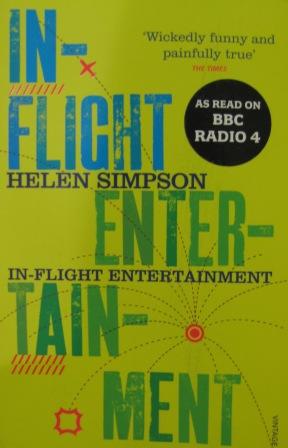 |
| 'In-Flight Entertainment' by Helen Simpson (Vintage, 2011) |
I've got to be honest, I struggled a bit with this book. I bought it because I'd been intrigued by 'Diary of an Interesting Year' (which has lost none of its power. Since re-reading it, I've found myself trying to be a bit less wasteful and a bit more environmentally friendly as I go about my business. There's not many stories that have snuck into my psyche like that!) and wanted something small and portable to take with me to read at a wedding (well, not at the actual wedding, obviously, but at the hotels the night before and night afterwards. Given the chance, I'd probably have filled the bags with books, so this was my attempt at being practical! Anyway...). I still feel it's a bit patchy and I felt more engaged by some stories than others (I've still no idea about 'The Tipping Point') and, sadly, I feel that the theme of environmental catastrophe was clumsily handled at times. It felt shoe-horned in in places and I felt a bit nagged really.
Looking at it now, though, I've realised that I actually enjoyed a lot more of it than I realised at the time. Also, I feel that a second reading when I've got fewer distractions might mean less of it flies over my head. To paraphrase the classic line, it's not the book, it's me.
I liked that some of these stories were a bit of a departure from others that I've read, focussed on more than relationships. 'Diary of an Interesting Year' is almost Science Fiction, while 'The Festival of the Immortals' was almost fantasy (well, for a book worm anyway!).
On the whole, I'd say this is not the best Helen Simpson book to start with, but I would recommend her as a writer to anyone, although her usual themes are likely to appeal more to a female audience. This is her fifth collection, so there are four others to try first. I've only read two, so don't feel I can recommend one just yet, although at least one Tweeter (Alex Griffith/@jalexgriffith ) praised 'Constitutional' when I mentioned it on Twitter. Perhaps that's the one I will go for next, once I've got a few more titles off the list!
09 September 2012
Going Walkabout
This morning, I finished 'The Unlikely Pilgrimage of Harold Fry' by Rachel Joyce. Unusually for me, this is a relatively recent publication (this year). I saw it reviewed in a weekend newspaper and decided to check it out of the library. Within a few pages, I was hooked and desperate to hitch a ride with the unexpected traveller, which is how come it became a new addition to the list.
Harold Fry's unlikely pilgrimage begins with a letter from an old colleague, Queenie Hennessy, delivered to his South Devon home. Dying of cancer in a Berwick-Upon-Tweed hospice in the far north east of England, Queenie has written to say a final goodbye. Harold is surprised to hear from her after 20 years absence from his life, but writes a reply to take to the post box. As he walks, however, he realises that something doesn't feel right. His written words aren't enough, but he doesn't know what else to do. Then a chance encounter with a sales assistant at a petrol station inspires him to do something remarkable; to leave his wife, his home and the predictable mundanity of his retired life and walk to Berwick, all in the hope that Queenie will live after all.
This book begins with a comi-tragic tone which makes it hard not to fall completely in love with Harold and root for him from the start. The first chapters describe lives and settings I feel so familiar with it gave me chills to see them described in print. Perhaps I've been reading too much science fiction lately, but I can't remember the last time I read a story set somewhere that felt so familiar! I also know quite a few of the locations Harold visited, which perhaps made it easier to sink into the story.
The beautiful simplicity of the plot is a smokescreen for a more complicated, moving and heart wrenching tale of regret, misunderstanding and the everyday reality of love. Only readers with a heart of flint could read this book and not shed a tear as the truth of Harold's less than happy life and relationships with Queenie, his son David and his wife Maureen become clear during his journey.
Although I suspected the truth about David from the start, it by no means took away from the narrative. Once my affection for Harold was established, I found I couldn't put the book down because I was so worried about whether he would be alright. But then, I am quite a softy.
On the whole, I felt this was a beautiful, engaging, moving book which will definitely be given to a few people as a present, but probably more likely to appeal to a female rather than a male audience. I would love to know what men who read it did think, though, as I fear I may be doing them a disservice.
Although a seasoned writer of radio plays, I understand that this was Ms Joyce's first novel. I will be keeping my eyes out for her second.
Now, back to the shelves. Where to next..?
Harold Fry's unlikely pilgrimage begins with a letter from an old colleague, Queenie Hennessy, delivered to his South Devon home. Dying of cancer in a Berwick-Upon-Tweed hospice in the far north east of England, Queenie has written to say a final goodbye. Harold is surprised to hear from her after 20 years absence from his life, but writes a reply to take to the post box. As he walks, however, he realises that something doesn't feel right. His written words aren't enough, but he doesn't know what else to do. Then a chance encounter with a sales assistant at a petrol station inspires him to do something remarkable; to leave his wife, his home and the predictable mundanity of his retired life and walk to Berwick, all in the hope that Queenie will live after all.
This book begins with a comi-tragic tone which makes it hard not to fall completely in love with Harold and root for him from the start. The first chapters describe lives and settings I feel so familiar with it gave me chills to see them described in print. Perhaps I've been reading too much science fiction lately, but I can't remember the last time I read a story set somewhere that felt so familiar! I also know quite a few of the locations Harold visited, which perhaps made it easier to sink into the story.
The beautiful simplicity of the plot is a smokescreen for a more complicated, moving and heart wrenching tale of regret, misunderstanding and the everyday reality of love. Only readers with a heart of flint could read this book and not shed a tear as the truth of Harold's less than happy life and relationships with Queenie, his son David and his wife Maureen become clear during his journey.
Although I suspected the truth about David from the start, it by no means took away from the narrative. Once my affection for Harold was established, I found I couldn't put the book down because I was so worried about whether he would be alright. But then, I am quite a softy.
On the whole, I felt this was a beautiful, engaging, moving book which will definitely be given to a few people as a present, but probably more likely to appeal to a female rather than a male audience. I would love to know what men who read it did think, though, as I fear I may be doing them a disservice.
Although a seasoned writer of radio plays, I understand that this was Ms Joyce's first novel. I will be keeping my eyes out for her second.
Now, back to the shelves. Where to next..?
23 August 2012
There's Something at the Bottom of the Garden...
I'm never going into a garden again and if you think I'll look at any future eclipses or other astronomical events, you've got another thing coming!
As you might be able to guess, I've just finished John Wyndham's 'The Day of the Triffids', probably the best known of this British author's novels.
'The Day of the Triffids' is a story of human survival in the midst of a terrifying worldwide apocalypse. Bill Mason wakes in a London hospital, his eyes bandaged following eye treatment. Confused and frightened by the lack of normal noise either in the hospital or outside his window, he cautiously removes the dressings and finds himself in the middle of a living nightmare. A 'meteorite' storm the previous night has blinded most of the world's population and, as he travels through London in shock, Bill finds that life as he knew it has gone for good. As he begins to encounter other survivors, he realises that the catastrophe has often brought out the worst in people. As the remaining population begins to find ways to group and cope with the new circumstances, a new, terrible threat emerges - the determined, devious and deadly Triffids...
Now, first things first. There was one part of this book that made me very, very irritated. One group of intellectualised survivors band together at a London university. One of the earliest things they do is call a meeting at which an eminent Sociologist talks about the future of society and how it will be necessary to leave elements of the old moral framework, behind for practical reasons. Fair enough. But why is sex their main priority when they haven't even found a safe way out of London yet? London, which is already littered with suicides and brutal gangs and already a breeding ground for disease? And when they only have one, shy nurse to provide pre- and postnatal care?!
I can only assume that when this book was written in the 1950s, talking about sanctioned sexual promiscuity was terribly, terribly shocking in a way it simply isn't today. Then it would sort of make sense. But to my modern (female) eyes, it just seemed like putting the cart before the horse. No point in having babies if you can't feed them or keep them safe, even if you are trying to save mankind.
On the whole though, this book is a real page turner, a brilliant combination of horror, socio-political comment and old fashioned adventure. It did get a bit preachy in places, particularly when an idealistic but impulsive character called Coker comes on the scene, but I think I understood most of the comparisons the author was drawing with different political ideologies.
I know I shouldn't be, but it still surprises me how relevant the science fiction of the last century still is. 'The Day of the Triffids' could be read as socio-political comment, environmental parable or analysis of how we might cope with extreme disaster. As a result, it's incredibly interesting as well as entertaining.
And, of course, you have a fantastic villain: The Triffids. Human beings may have had a hand in creating their predicament, but the constant and escalating onslaughts by the seven foot tall, alien-looking plants really is a danger all its own. They're clever, they're everywhere and they're topped with lightening-quick stings which can kill a man several feet away. As I say, Prince Charming can do the gardening from now on!
'The Day of the Triffids' begins with probably one of the most famous opening lines ever. Striking the reader like a slap across the face from the start, the book doesn't let up at any point. Before you know it, you've turned the last page... And you're wondering whether that rustling really is just the breeze through the trees. Shudder!
As you might be able to guess, I've just finished John Wyndham's 'The Day of the Triffids', probably the best known of this British author's novels.
'The Day of the Triffids' is a story of human survival in the midst of a terrifying worldwide apocalypse. Bill Mason wakes in a London hospital, his eyes bandaged following eye treatment. Confused and frightened by the lack of normal noise either in the hospital or outside his window, he cautiously removes the dressings and finds himself in the middle of a living nightmare. A 'meteorite' storm the previous night has blinded most of the world's population and, as he travels through London in shock, Bill finds that life as he knew it has gone for good. As he begins to encounter other survivors, he realises that the catastrophe has often brought out the worst in people. As the remaining population begins to find ways to group and cope with the new circumstances, a new, terrible threat emerges - the determined, devious and deadly Triffids...
Now, first things first. There was one part of this book that made me very, very irritated. One group of intellectualised survivors band together at a London university. One of the earliest things they do is call a meeting at which an eminent Sociologist talks about the future of society and how it will be necessary to leave elements of the old moral framework, behind for practical reasons. Fair enough. But why is sex their main priority when they haven't even found a safe way out of London yet? London, which is already littered with suicides and brutal gangs and already a breeding ground for disease? And when they only have one, shy nurse to provide pre- and postnatal care?!
I can only assume that when this book was written in the 1950s, talking about sanctioned sexual promiscuity was terribly, terribly shocking in a way it simply isn't today. Then it would sort of make sense. But to my modern (female) eyes, it just seemed like putting the cart before the horse. No point in having babies if you can't feed them or keep them safe, even if you are trying to save mankind.
On the whole though, this book is a real page turner, a brilliant combination of horror, socio-political comment and old fashioned adventure. It did get a bit preachy in places, particularly when an idealistic but impulsive character called Coker comes on the scene, but I think I understood most of the comparisons the author was drawing with different political ideologies.
I know I shouldn't be, but it still surprises me how relevant the science fiction of the last century still is. 'The Day of the Triffids' could be read as socio-political comment, environmental parable or analysis of how we might cope with extreme disaster. As a result, it's incredibly interesting as well as entertaining.
And, of course, you have a fantastic villain: The Triffids. Human beings may have had a hand in creating their predicament, but the constant and escalating onslaughts by the seven foot tall, alien-looking plants really is a danger all its own. They're clever, they're everywhere and they're topped with lightening-quick stings which can kill a man several feet away. As I say, Prince Charming can do the gardening from now on!
'The Day of the Triffids' begins with probably one of the most famous opening lines ever. Striking the reader like a slap across the face from the start, the book doesn't let up at any point. Before you know it, you've turned the last page... And you're wondering whether that rustling really is just the breeze through the trees. Shudder!
10 August 2012
Don't Judge a Book by its Cover...
I've just finished 'The Somnambulist', Essie Fox's debut novel. When I received the review copy from New Books Magazine (http://www.newbooksmag.com/), I was very excited. It sounded right up my street going by the blurb on the back cover and I couldn't wait to get started on it. Unfortunately, I've found myself trapped in a classic 'don't judge a book by its cover' fable.
'The Somnambulist' tells the story of 17 year old Phoebe Turner, who lives with her hard line Christian mother Maud and her glamorous singer aunt Cissy in London's East End in the late 1800s. When Cissy dies unexpectedly, the web of deceit in which Phoebe has been unknowingly trapped begins to unravel. Phoebe begins a journey of personal discovery which takes her from the rowdy London music halls and bustling London docks to beautiful town houses and quiet rural Herefordshire. But it's a difficult time for Phoebe as half truths and lies are brought into the open and she has to deal with her terrible grief at the loss of Cissy alone.
On the whole, I was really disappointed by this novel. I will emphasise that it is a Ms Fox's first book and I really do believe that her work will improve with time and practice, but I personally felt that there were so many faults with 'The Somnambulist' that I hardly know where to begin.
For a start, the book would have benefited from a different narrative structure. For example, the first fifty pages could've been removed entirely and the whole section told in flashback while Phoebe was at the Dinwood Court, the house of her mysterious benefactor's wife. She spends so much of the novel repetitively going back to the early scenes at Wilton's Music Hall, it bogs the story down and relieves it of any tension generated, so to use her reflections to drip feed new information to the reader would have been more likely to make me want to keep reading. As it is, the book feels like a train of thought, which is a shame when there are so many more interesting ways to plan and structure a story.
'The Somnambulist' is heavily influenced by Victorian literature, but there are times when I felt like the style had been given precedence over substance. The sentences are often wordy and convoluted and it just makes the book very heavy going, especially when the information is repetitive.
The story itself is OK, but very predictable and seems a Frankenstein's Monster of 19th century literary clichés. Within a few pages, I knew exactly what the 'big twist' was going to be and only kept going to the end because I hoped that the writer has come up with something better than I predicted. I would've been more than happy to have a fast one pulled on me! On top of that, it got to a stage where I started to think Ms Fox was just being cruel to Phoebe, throwing one disappointment at her after another, torturing her like a cat with a mouse. No wonder the girl had a breakdown!
I have mixed feelings about the characters. They neither ring true nor act as metaphors and it annoyed me to find another story with another negative portrayal of a religious person.
Also, I'm sure that the tone changes part way into the novel. To begin with, it has a lovely voice to it that sounds exactly as though Phoebe is recounting her tale in later life. It's chatty and cheerful and completely unlike the rest of the book!
One thing I can't fault is Ms Fox's enthusiasm for the era. I rather like a bit of neo-gothic, pre-Raphaelite Victoriana myself and so enjoyed identifying the real-life sources of some of the things included in the story (look out for a thinly veiled PT Barnum!).
Also, despite the long-winded sentences which meant I had to read some pages two or three times, it's not actually that hard a read, particularly towards the end. It's more the constant wailing and gnashing of teeth that makes it hard work!
New Books Magazine is for reading groups and was of great inspiration to me when I ran one myself. The main plus of 'The Somnambulist' is that, going by other reviews I've read, it's a bit of a 'love it or hate it' book. As such it will give people plenty to talk about at book group meetings.
This book is a holiday read at best, but I hope that future books by Ms Fox will be classics worthy of the rest of the year too.
'The Somnambulist' tells the story of 17 year old Phoebe Turner, who lives with her hard line Christian mother Maud and her glamorous singer aunt Cissy in London's East End in the late 1800s. When Cissy dies unexpectedly, the web of deceit in which Phoebe has been unknowingly trapped begins to unravel. Phoebe begins a journey of personal discovery which takes her from the rowdy London music halls and bustling London docks to beautiful town houses and quiet rural Herefordshire. But it's a difficult time for Phoebe as half truths and lies are brought into the open and she has to deal with her terrible grief at the loss of Cissy alone.
On the whole, I was really disappointed by this novel. I will emphasise that it is a Ms Fox's first book and I really do believe that her work will improve with time and practice, but I personally felt that there were so many faults with 'The Somnambulist' that I hardly know where to begin.
 |
| 'The Somnambulist' by Essie Fox (Orion, 2012) |
For a start, the book would have benefited from a different narrative structure. For example, the first fifty pages could've been removed entirely and the whole section told in flashback while Phoebe was at the Dinwood Court, the house of her mysterious benefactor's wife. She spends so much of the novel repetitively going back to the early scenes at Wilton's Music Hall, it bogs the story down and relieves it of any tension generated, so to use her reflections to drip feed new information to the reader would have been more likely to make me want to keep reading. As it is, the book feels like a train of thought, which is a shame when there are so many more interesting ways to plan and structure a story.
'The Somnambulist' is heavily influenced by Victorian literature, but there are times when I felt like the style had been given precedence over substance. The sentences are often wordy and convoluted and it just makes the book very heavy going, especially when the information is repetitive.
The story itself is OK, but very predictable and seems a Frankenstein's Monster of 19th century literary clichés. Within a few pages, I knew exactly what the 'big twist' was going to be and only kept going to the end because I hoped that the writer has come up with something better than I predicted. I would've been more than happy to have a fast one pulled on me! On top of that, it got to a stage where I started to think Ms Fox was just being cruel to Phoebe, throwing one disappointment at her after another, torturing her like a cat with a mouse. No wonder the girl had a breakdown!
I have mixed feelings about the characters. They neither ring true nor act as metaphors and it annoyed me to find another story with another negative portrayal of a religious person.
Also, I'm sure that the tone changes part way into the novel. To begin with, it has a lovely voice to it that sounds exactly as though Phoebe is recounting her tale in later life. It's chatty and cheerful and completely unlike the rest of the book!
One thing I can't fault is Ms Fox's enthusiasm for the era. I rather like a bit of neo-gothic, pre-Raphaelite Victoriana myself and so enjoyed identifying the real-life sources of some of the things included in the story (look out for a thinly veiled PT Barnum!).
Also, despite the long-winded sentences which meant I had to read some pages two or three times, it's not actually that hard a read, particularly towards the end. It's more the constant wailing and gnashing of teeth that makes it hard work!
New Books Magazine is for reading groups and was of great inspiration to me when I ran one myself. The main plus of 'The Somnambulist' is that, going by other reviews I've read, it's a bit of a 'love it or hate it' book. As such it will give people plenty to talk about at book group meetings.
This book is a holiday read at best, but I hope that future books by Ms Fox will be classics worthy of the rest of the year too.
19 July 2012
The Mad Flappers' Cocktail Party
I've just finished reading 'The Great Gatsby' by F. Scott Fitzgerald and my mind has been buzzing ever since. Mainly with '80s pop songs which somehow relate to the plot ('Tell me lies, tell me sweet little lies...'), but anyhoo...
Set in 1920s New York at the height of the crazy Jazz Age, 'The Great Gatsby' is a fable about obsession - obsession with money, status and decadent living. Inspired by aspects of Fitzgerald's own life, the book is narrated by Nick Carraway, who moves to West Egg, Long Island, so he can work in the city. At first he's intrigued by his enigmatic neighbour, the eponymous Jay Gatsby, but as the truth and lies of Gatsby's life begin to unravel and Carraway finds himself caught up in terrible events beyond his control, he rapidly realises things are not what they appeared. Far from being a staid, sober, man-in-charge, Gatsby is in the thrall of of the flighty, upper class Daisy Buchanan, cousin to Carraway, inhabitant of the fashionable East Egg and wife to the brutish Tom.
I've read a few of Fitzgerald's short stories and absolutely love the way he describes and gets right into the heads of his characters. His people are layered and their moods and morality change and shift, making them incredibly interesting. I wasn't sure how this would translate to a novel, but I'm glad to say this feature of Fitzgerald's writing remains and is key to the story.
Much like its title character, this book is deceptive. It's less than 200 pages long and has quite a ostensibly simple plot, but the more I've thought about it, the more I've realised how clever it is. 'The Great Gatsby' is often described as a classic of American literature, but don't let that put you off. Far from deifying the 'American way', it actually breaks it down to a personal level and shows the harm the influence of a feckless, irresponsible upper class can do. In an age of debt-inducing consumerism and all encompassing celebrity culture, this book's message still resonates today.
Overall, I would recommend this book. It works on several levels - as a story, as a mystery, as a comment on society - and I think many readers would get a lot out of the experience. For me, it's the continuation of what I hope will be a beautiful friendship and I hope to spend a lot more time on the couch following Fitzgerald into the consciousness of his characters in the future.
Set in 1920s New York at the height of the crazy Jazz Age, 'The Great Gatsby' is a fable about obsession - obsession with money, status and decadent living. Inspired by aspects of Fitzgerald's own life, the book is narrated by Nick Carraway, who moves to West Egg, Long Island, so he can work in the city. At first he's intrigued by his enigmatic neighbour, the eponymous Jay Gatsby, but as the truth and lies of Gatsby's life begin to unravel and Carraway finds himself caught up in terrible events beyond his control, he rapidly realises things are not what they appeared. Far from being a staid, sober, man-in-charge, Gatsby is in the thrall of of the flighty, upper class Daisy Buchanan, cousin to Carraway, inhabitant of the fashionable East Egg and wife to the brutish Tom.
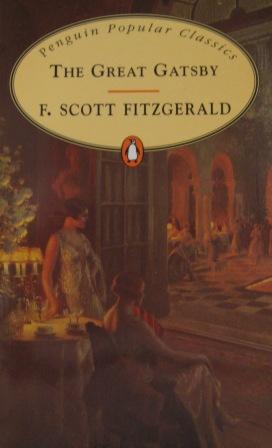 |
| 'The Great Gatsby' by F. Scott Fitzgerald (Penguin Popular Classics, 1994) |
Much like its title character, this book is deceptive. It's less than 200 pages long and has quite a ostensibly simple plot, but the more I've thought about it, the more I've realised how clever it is. 'The Great Gatsby' is often described as a classic of American literature, but don't let that put you off. Far from deifying the 'American way', it actually breaks it down to a personal level and shows the harm the influence of a feckless, irresponsible upper class can do. In an age of debt-inducing consumerism and all encompassing celebrity culture, this book's message still resonates today.
Overall, I would recommend this book. It works on several levels - as a story, as a mystery, as a comment on society - and I think many readers would get a lot out of the experience. For me, it's the continuation of what I hope will be a beautiful friendship and I hope to spend a lot more time on the couch following Fitzgerald into the consciousness of his characters in the future.
08 July 2012
Handle with Care
I've just finished reading 'Fragile Things', a collection of short stories and poems by one of my all time favourite writers, Neil Gaiman.
'Fragile Things' is an eclectic parcel of work which, typically for Gaiman, is hard to pigeon hole, even for the sake of review. Some stories verge on science fiction (e.g. the Holmesian 'A Study in Emerald' and 'Goliath', a story from the world of 'The Matrix'), while others are funny (such as 'Forbidden Brides of the Faceless Slaves in the Secret House of the Night of Dread Desire'). Some resemble classically eerie ghost tales (like 'October in the Chair' and 'Closing Time'), others disturbing crime stories (e.g. 'Keepsakes and Treasures' featuring the kind of influential characters I really hope don't exist in real life) and the nightmarishly frightening (including 'Feeders and Eaters' and 'The Flints of Memory Lane'. The former will definitely stay with me a long time, which is weird because it's creepy rather than horrific!). The collection ends with a novella called 'The Monarch of the Glen', a companion piece to Gaiman's fantastic novel 'American Gods', which draws upon Ancient Norse mythology and doesn't shy away from ratcheting up the tension!
Although I've not read any of his graphic novels, I have read and enjoyed all of Mr Gaiman's adult fiction and his last collection of shorts, 'Smoke and Mirrors'. To me, 'Fragile Things' felt a lot darker and more haunting than the other books I've read and made me wish I was all wrapped up in bed, safe and sound at times! Not that being creeped out by what I'm reading is a bad thing. In fact, it's arguably right on the Zeitgeist for a summer of perpetual rain, which feels more like November than July!
Overall, Mr Gaiman has once again successfully put his unique stamp on a range of niche genres here, delivering many stories which will stay with me for a very long time and for the right reasons. I'd recommend 'Fragile Things' as something for fans of Science Fiction, Horror and Gothic ghost stories to try, but I wouldn't guarantee that everyone will like every story or poem! Ultimately, it comes down to more than just genre - it's about the whole package, whether you like Mr Gaiman as a writer, his style and the way he thinks.
Gaiman fans will find much to enjoy here, although be careful you don't get caught out by the darker tone of this volume. The fact 'Fragile Things' is short fiction also means it's a great opportunity for genre fans to open it up and taking their pick of what's inside. Don't have nightmares now!
 |
| 'Fragile Things' by Neil Gaiman (Headline Review, 2006) |
Although I've not read any of his graphic novels, I have read and enjoyed all of Mr Gaiman's adult fiction and his last collection of shorts, 'Smoke and Mirrors'. To me, 'Fragile Things' felt a lot darker and more haunting than the other books I've read and made me wish I was all wrapped up in bed, safe and sound at times! Not that being creeped out by what I'm reading is a bad thing. In fact, it's arguably right on the Zeitgeist for a summer of perpetual rain, which feels more like November than July!
Overall, Mr Gaiman has once again successfully put his unique stamp on a range of niche genres here, delivering many stories which will stay with me for a very long time and for the right reasons. I'd recommend 'Fragile Things' as something for fans of Science Fiction, Horror and Gothic ghost stories to try, but I wouldn't guarantee that everyone will like every story or poem! Ultimately, it comes down to more than just genre - it's about the whole package, whether you like Mr Gaiman as a writer, his style and the way he thinks.
Gaiman fans will find much to enjoy here, although be careful you don't get caught out by the darker tone of this volume. The fact 'Fragile Things' is short fiction also means it's a great opportunity for genre fans to open it up and taking their pick of what's inside. Don't have nightmares now!
07 July 2012
The Art of Reading
I had a lovely visit to the city of Chichester in West Sussex recently and was delighted to find an exhibition of Philip Jackson's imposing sculptures on display in the cathedral precincts. Reading is such a personal experience that I'm always fascinated when artists use their talents to express it visually, so I was particularly drawn to a number of Mr Jackson's amazing creations:
 |
| 'Reading Chaucer' |
 |
| 'Guided Missal' |
 |
| 'Guided Missal' in close up. |
 |
| 'Chanting Cimaosa' (I know it's not strictly reading, but I couldn't resist!) |
 |
| 'Chanting Cimarosa' in close up. |
 |
| 'Mr Bennet's Daughter'. Can't imagine what that's a reference to! |
The exhibition is on from 25 June 2012 to 28 July 2012 in the cloisters of Chichester Cathedral. Don't miss out on this wonderful collection of work!
For more images of Mr Jackson's sculpture, visit his website:
http://www.philipjacksonsculptures.co.uk/ .
07 May 2012
Dangerous Liaisons
Arrragh! I've been trying to decide what I want to say about 'Notes on a Scandal' by Zoe Heller for hours now and I keep going round in circles. It's driving me nuts. Have written at least four versions of this so far and it's getting silly. Fingers crossed for version number five...
The final book I finished last week was 'Notes on a Scandal' by Zoe Heller. I really enjoyed the film version of this story and hoped that the source material would be just as good, if not better.
'Notes on a Scandal' tells the story of pottery teacher Sheba Hart and her affair with underage pupil Steven Connolly in the words of her colleague and eventual close friend Barbara Covett. Without Sheba's knowledge and intending to 'set the record straight', Barbara puts pen to paper to record what Sheba has told her and what Barbara herself has seen and heard. As Barbara describes the complex relationships surrounding Sheba, it becomes clear that the women are not a natural partnership and Sheba may not be the only one guilty of an inappropriate obsession.
The more I think about this book, the more my head hurts. Barbara acts a bit like both a filter and a funnel - she's clearly an unreliable narrator only reporting things to suit her life view, but she also gradually picks off the extended network of characters we meet at the beginning of the book until it's just her and Sheba against the world. As such, the reader can't take things at face value and has to get as much as possible from characters when they appear as they may never be seen again! Consequently, I feel like I don't know what to think and as though I could easily have missed something very significant without even realising it.
I also think the book could have done with some notes of its own as an introduction. 'Notes on a Scandal' seems to pick up on the particular Zeitgeist of 2003, when it was published. That was the year of the Soham murders trial and new UK legislation to do with sexual offences, so child safeguarding was quite a hot topic in the media at the time. I had to look this up afterwards and knowing that before I started reading would have added a whole new layer to the book. The scandal is assumed to be Sheba's affair, but is the book also a lesson about looking for danger away from the obvious? For all her faults, Sheba didn't intend to harm Connolly and he is portrayed as the more active instigator of the relationship. Sheba could have just as easily become obsessed with a colleague or someone she bumped into down the shops, so why couldn't the vastly more predatory Barbara also be a threat to pupils as well as colleagues?
Comparing the book and the film, I think I've let myself down a bit by watching one before reading the other. The film creates a creeping sense of doom because it has a chronological narrative structure which follows the timeline of events. The book, however, starts at the end, which makes it much harder to create any sort of suspense, especially if like me you know roughly what happens. I think the film also improves on the book in other ways, but I don't want to go into to much detail for fear of spoilers. I preferred the ending of the book, but think the film just captures the sense of menace much better. After all, it's Barbara's job as the book's narrator to make everything seem nice and normal.
On the whole, I think that this book was a lot more subtle than I expected. Pretty much as soon as I'd finished it I decided that I'd need to read it again at least once to see if I could 'get it' a second time around. I'm assuming it's just me being lazy though - it could as easily be that that not being in the 2003 Zeitgeist means there's implicit references that I will never get. I don't think I'll know until I try reading it again.
The book feels so subtle and manipulative that it's a credit to its author, but it's like a pale imitation which hints at the anger, passion and complexity portrayed so well in the film. It's thought to be unusual, but perhaps this is an instance where the film actually is better than the book. I can think of other examples - 'Fight Club' by Chuck Palahniuk springs to mind - but maybe these are the exceptions which prove the rule.
So, if you haven't read it, give it a go, then watch the film. If you have watched the film, you might want to read it, but you might be better off with something else. On the theme of obsession, I'd recommend the first three Ripley novels of Patricia Highsmith.
Now, time to choose something else from the shelves!
The final book I finished last week was 'Notes on a Scandal' by Zoe Heller. I really enjoyed the film version of this story and hoped that the source material would be just as good, if not better.
 |
| 'Notes on a Scandal' by Zoe Heller (Viking/Penguin Group, 2003) |
The more I think about this book, the more my head hurts. Barbara acts a bit like both a filter and a funnel - she's clearly an unreliable narrator only reporting things to suit her life view, but she also gradually picks off the extended network of characters we meet at the beginning of the book until it's just her and Sheba against the world. As such, the reader can't take things at face value and has to get as much as possible from characters when they appear as they may never be seen again! Consequently, I feel like I don't know what to think and as though I could easily have missed something very significant without even realising it.
I also think the book could have done with some notes of its own as an introduction. 'Notes on a Scandal' seems to pick up on the particular Zeitgeist of 2003, when it was published. That was the year of the Soham murders trial and new UK legislation to do with sexual offences, so child safeguarding was quite a hot topic in the media at the time. I had to look this up afterwards and knowing that before I started reading would have added a whole new layer to the book. The scandal is assumed to be Sheba's affair, but is the book also a lesson about looking for danger away from the obvious? For all her faults, Sheba didn't intend to harm Connolly and he is portrayed as the more active instigator of the relationship. Sheba could have just as easily become obsessed with a colleague or someone she bumped into down the shops, so why couldn't the vastly more predatory Barbara also be a threat to pupils as well as colleagues?
Comparing the book and the film, I think I've let myself down a bit by watching one before reading the other. The film creates a creeping sense of doom because it has a chronological narrative structure which follows the timeline of events. The book, however, starts at the end, which makes it much harder to create any sort of suspense, especially if like me you know roughly what happens. I think the film also improves on the book in other ways, but I don't want to go into to much detail for fear of spoilers. I preferred the ending of the book, but think the film just captures the sense of menace much better. After all, it's Barbara's job as the book's narrator to make everything seem nice and normal.
On the whole, I think that this book was a lot more subtle than I expected. Pretty much as soon as I'd finished it I decided that I'd need to read it again at least once to see if I could 'get it' a second time around. I'm assuming it's just me being lazy though - it could as easily be that that not being in the 2003 Zeitgeist means there's implicit references that I will never get. I don't think I'll know until I try reading it again.
The book feels so subtle and manipulative that it's a credit to its author, but it's like a pale imitation which hints at the anger, passion and complexity portrayed so well in the film. It's thought to be unusual, but perhaps this is an instance where the film actually is better than the book. I can think of other examples - 'Fight Club' by Chuck Palahniuk springs to mind - but maybe these are the exceptions which prove the rule.
So, if you haven't read it, give it a go, then watch the film. If you have watched the film, you might want to read it, but you might be better off with something else. On the theme of obsession, I'd recommend the first three Ripley novels of Patricia Highsmith.
Now, time to choose something else from the shelves!
Say What??!
You may not have heard, but the UK has been having some pretty nasty weather lately. Normally around this time of year we'd be getting the two weeks of sunshine traditionally called 'the summer', but instead we've had nearly a month of strong winds, torrential rain and temperatures so low you need to lie on the floor to see them. My dreams of sitting in the cautious spring time sun and getting some reading done have been replaced with afternoons on the sofa with a blanket, warm drink and hot water bottle!
It was on just such an afternoon last week that I read 'Weird Things Customers Say in Bookshops' by Jen Campbell (Follow her on Twitter: @aeroplanegirl). Unusually for me, this is a current bestseller - I read the title in a book chart and decided to take a closer look the next time I was in a bookshop. That shop turned out to be Tenby Bookshop and the look led to a purchase.
(Tenby Bookshop is a bit of a quasi-misnomer really - it is a shop in Tenby, but only about a quarter of the shop floor contains books. It's mainly quality gifts, which struck me as a bit odd. I'm used to seaside bookshops really being newsagents with a few holiday reads in, so Tenby clearly attracts a higher class of clientèle! Oh, and me!)
'Weird Things...' breaks the rules and does exactly what it says on the cover. It's a collection of funny and frightful things said in bookshops in the UK and around the world. The first two sections represent things said in the Edinburgh Bookshop, Edinburgh, and Ripping Yarns, North London, while the last chapter covers everywhere else.
This book really brightened up my afternoon. I literally laughed out loud while reading it, much to the annoyance of Prince Charming who was trying to watch telly at the time. Most of the quotes are funny, but there are also many which make you gasp at the audacity of some people. I'm sure that most booksellers are lovely people, but surely its preferable to leave your children with a trained childminder than an otherwise-occupied shopkeeper? And the number of heartless bastards who asked shops to make recommendations before openly stating they would be going online to buy was unbelievable. I was stunned that some people can be so self-centred that they think this sort of thing is OK.
I have a lot of friends who work/have worked in retail and this collection is a surprisingly accurate reflection of the sorts of stories they've told me, which was reassuring as some of the things said were almost too mad to be true.
This collection was very well selected. It could easily have ended up taking the mickey out of stupid customers, but fortunately this doesn't go too far. It's also of a very good length. It's long enough to offer variety, but not so long that it starts to get severely repetitive or dull.
Due to its popularity (and probably an abundance of source material!), I'm suspect 'Weird Things...' will have a sequel. I may not buy it myself, but it would be a great stocking filler (Hint for Prince Charming!). I think the fact that this book wasn't published with the usual deluge of Christmas stocking fillers in November/December has actually made it stand out - it could easily have been lost amongst them and deserves better.
So, if you want something to cheer you up in these dark days of rubbish weather, double-dip recession and goodness knows what else, I'd buy yourself a copy of this. But from an independent bookshop please! I'm led to believe that there are a few left...
 |
| 'Weird Things Customers Say in Bookshops' by Jen Campbell (Constable & Robinson, 2012) |
(Tenby Bookshop is a bit of a quasi-misnomer really - it is a shop in Tenby, but only about a quarter of the shop floor contains books. It's mainly quality gifts, which struck me as a bit odd. I'm used to seaside bookshops really being newsagents with a few holiday reads in, so Tenby clearly attracts a higher class of clientèle! Oh, and me!)
'Weird Things...' breaks the rules and does exactly what it says on the cover. It's a collection of funny and frightful things said in bookshops in the UK and around the world. The first two sections represent things said in the Edinburgh Bookshop, Edinburgh, and Ripping Yarns, North London, while the last chapter covers everywhere else.
This book really brightened up my afternoon. I literally laughed out loud while reading it, much to the annoyance of Prince Charming who was trying to watch telly at the time. Most of the quotes are funny, but there are also many which make you gasp at the audacity of some people. I'm sure that most booksellers are lovely people, but surely its preferable to leave your children with a trained childminder than an otherwise-occupied shopkeeper? And the number of heartless bastards who asked shops to make recommendations before openly stating they would be going online to buy was unbelievable. I was stunned that some people can be so self-centred that they think this sort of thing is OK.
I have a lot of friends who work/have worked in retail and this collection is a surprisingly accurate reflection of the sorts of stories they've told me, which was reassuring as some of the things said were almost too mad to be true.
This collection was very well selected. It could easily have ended up taking the mickey out of stupid customers, but fortunately this doesn't go too far. It's also of a very good length. It's long enough to offer variety, but not so long that it starts to get severely repetitive or dull.
Due to its popularity (and probably an abundance of source material!), I'm suspect 'Weird Things...' will have a sequel. I may not buy it myself, but it would be a great stocking filler (Hint for Prince Charming!). I think the fact that this book wasn't published with the usual deluge of Christmas stocking fillers in November/December has actually made it stand out - it could easily have been lost amongst them and deserves better.
So, if you want something to cheer you up in these dark days of rubbish weather, double-dip recession and goodness knows what else, I'd buy yourself a copy of this. But from an independent bookshop please! I'm led to believe that there are a few left...
06 May 2012
What a Difference a Day Makes
I've had a bit of a reading rush this week and finished three books within five days. Very unlike me, think I need a lie down in a dark room!
The first book I read was 'Miss Pettigrew Lives for a Day' by Winifred Watson, one of Persephone Book's most popular books and a bestseller. Having read this funny, charming novel, I can see why.
After a mix up at an employment agency, dowdy, middle-aged governess Miss Pettigrew is sent to work for glamorous night club singer Delysia LaFosse. Before she knows what is happening, she's swept up in the chaotic lives of Miss LaFosse and her friends. Acting as Agony Aunt to them, she faces unpleasant gangsters and wayward fiancés and begins to grow the confidence and self-esteem her life so far hasn't given her.
Now, I'm a little suspicious of 'Cinderella' stories. I find it annoying that Hollywood so often tells us the only way that a woman can get Prince Charming is by having a makeover - I think it misses the point of the story. Cinderella had the attributes of a princess, which is why when she's dressed like one and sent to the ball, she stands out from the crowd of power-hungry aristocracy and pushy-parented local gentry. It's true that Miss Pettigrew does get a makeover in this book (thinking about it, that was the point at which I put the book down for a week or so), but that's really just the start of it - it's not just about the frock, it's making her look and feel like she belongs in Miss LaFosse's social sphere so she begins to feel at home, grow in confidence and shine.
The thing I enjoyed most about this book was the dialogue. Mrs Watson clearly had a real gift for writing witty repartee and it genuinely made me laugh out loud.
Because it's funny and is set in the pre-war years, it's easy to compare 'Miss Pettigrew...' with the work of PG Wodehouse, but there's a sadness to the former which you'd never get in a Jeeves and Wooster novel. Miss Pettigrew is haunted by the fact that her wonderful day will end and that going back to her 'real' life means poverty and homelessness. Wodehouse is too lighthearted for that - the worst that can happen is the hero will have to marry the wrong girl. They'll never be disinherited, they'll always have a fortune behind them.
This means that, by contrast, when Miss Pettigrew starts to grow in confidence and get pleasure from the odd circumstances she's found herself in, the reader gets something akin to real joy from it. And that's what makes this book a real pick-me-up. We all hope that nice things happen to good people, so when they do, even in books, it's hard not to be happy about it.
If you like modern day chick lit and like to be charmed by adorable, if slightly bonkers, characters, I'd recommend you give this a go. The 1930s style is a bit odd at first, but I soon got used to it because of that amazing dialogue. Just imagine it as a Noel Coward-style play and you'll get along just fine.
Oh, and a big shout out to the wonderful people at Persephone Books. I have a special love for this publishers as my ancestors used to run a business from their Holburn shop! Just seems right somehow! Their catalogue currently stands at 98 otherwise unavailable 20th century classics, including novels, cookbooks, short story collections and probably a lot more. I have two more of their distinctive grey covered books on my shelves at the moment, so I'm sure they'll crop up again eventually! Let's hope their other books are up to Miss Pettigrew's standard!
The first book I read was 'Miss Pettigrew Lives for a Day' by Winifred Watson, one of Persephone Book's most popular books and a bestseller. Having read this funny, charming novel, I can see why.
After a mix up at an employment agency, dowdy, middle-aged governess Miss Pettigrew is sent to work for glamorous night club singer Delysia LaFosse. Before she knows what is happening, she's swept up in the chaotic lives of Miss LaFosse and her friends. Acting as Agony Aunt to them, she faces unpleasant gangsters and wayward fiancés and begins to grow the confidence and self-esteem her life so far hasn't given her.
 |
| 'Miss Pettigrew Lives for a Day' by Winifred Watson (Persephone Classics, 2008) |
The thing I enjoyed most about this book was the dialogue. Mrs Watson clearly had a real gift for writing witty repartee and it genuinely made me laugh out loud.
Because it's funny and is set in the pre-war years, it's easy to compare 'Miss Pettigrew...' with the work of PG Wodehouse, but there's a sadness to the former which you'd never get in a Jeeves and Wooster novel. Miss Pettigrew is haunted by the fact that her wonderful day will end and that going back to her 'real' life means poverty and homelessness. Wodehouse is too lighthearted for that - the worst that can happen is the hero will have to marry the wrong girl. They'll never be disinherited, they'll always have a fortune behind them.
This means that, by contrast, when Miss Pettigrew starts to grow in confidence and get pleasure from the odd circumstances she's found herself in, the reader gets something akin to real joy from it. And that's what makes this book a real pick-me-up. We all hope that nice things happen to good people, so when they do, even in books, it's hard not to be happy about it.
If you like modern day chick lit and like to be charmed by adorable, if slightly bonkers, characters, I'd recommend you give this a go. The 1930s style is a bit odd at first, but I soon got used to it because of that amazing dialogue. Just imagine it as a Noel Coward-style play and you'll get along just fine.
Oh, and a big shout out to the wonderful people at Persephone Books. I have a special love for this publishers as my ancestors used to run a business from their Holburn shop! Just seems right somehow! Their catalogue currently stands at 98 otherwise unavailable 20th century classics, including novels, cookbooks, short story collections and probably a lot more. I have two more of their distinctive grey covered books on my shelves at the moment, so I'm sure they'll crop up again eventually! Let's hope their other books are up to Miss Pettigrew's standard!
02 May 2012
Happy Birthday!
It is a year to the day I started this blog! Whoop, whoop! Let the party poppers pop, the songs be sung and the cake be eaten!!
OK, maybe I should tone down the celebrations just a little. To be honest, I've not really done as well as I'd have hoped, but, let's face it, this bookworm was never going to change her spots (or whatever worms have!) overnight!
I have made some progress though and I'm pleased with that. I've not bought anything like as many books as I did before starting this project, so my list of things to read hasn't grown that much really. Honest!
I've also have read some amazing books since May 2011, some of which had been sat on my shelves for years literally gathering dust. 'Brave New World', 'The Help' and 'Jilted Generation' immediately spring to mind. I really can't believe I let these gems just sit there for so long. It does give me hope, however, that there are probably a lot more goodies just waiting there to be picked up and read. If that doesn't give me the energy to keep going, I don't know what will.
So, time for a bit of maths. In the last 12 months, I've ready 23 books. Not quite two a month then. If I carry on at that rate, that means it's going to take me nearly 20 years to read everything. Just as well I can self-censor, I wouldn't want anyone knowing what words spin through my head at the thought of that. Picking up the pace would seem like a good idea!
One thing I have learned in the last year, though, is that my greatest enemy is my own curiosity. I love to read because I want to know about things, which is a nice thing to want, but an impossible thing to achieve. Also, being nosy means that I am quite easily distracted. Y'know, by the usual sorts of things, but mainly what I could read next and things on the web. Don't get me wrong, the internet is an amazing thing that I'm very grateful for, but it can be rather distracting! Equally, if I don't understand something I read, it can be a useful tool. So, swings and roundabouts.
Every new year should begin with a resolution, so here's mine. I'm going to be a lot more focussed in the next 12 months. And I'm going to aim for at least two books a month (I think that's the least I should do). But, to be fair to myself, I think I also need to be more ruthless. If I'm not getting on with a book, I need to know when I'm beaten. I really think that every book has its time. Sometimes you're just not at the right place in your life to fully understand and get the most out of something. So I need to learn to recognise that too. Then perhaps I won't take two months to read a book of short stories.
Very importantly, thank you very much to everyone, friends and strangers, who has encouraged me in my project so far. I hope you're enjoying the blog and the tweets (@Girl_LovesBooks) and you'll stick with me for just a bit longer!
OK, maybe I should tone down the celebrations just a little. To be honest, I've not really done as well as I'd have hoped, but, let's face it, this bookworm was never going to change her spots (or whatever worms have!) overnight!
I have made some progress though and I'm pleased with that. I've not bought anything like as many books as I did before starting this project, so my list of things to read hasn't grown that much really. Honest!
I've also have read some amazing books since May 2011, some of which had been sat on my shelves for years literally gathering dust. 'Brave New World', 'The Help' and 'Jilted Generation' immediately spring to mind. I really can't believe I let these gems just sit there for so long. It does give me hope, however, that there are probably a lot more goodies just waiting there to be picked up and read. If that doesn't give me the energy to keep going, I don't know what will.
So, time for a bit of maths. In the last 12 months, I've ready 23 books. Not quite two a month then. If I carry on at that rate, that means it's going to take me nearly 20 years to read everything. Just as well I can self-censor, I wouldn't want anyone knowing what words spin through my head at the thought of that. Picking up the pace would seem like a good idea!
One thing I have learned in the last year, though, is that my greatest enemy is my own curiosity. I love to read because I want to know about things, which is a nice thing to want, but an impossible thing to achieve. Also, being nosy means that I am quite easily distracted. Y'know, by the usual sorts of things, but mainly what I could read next and things on the web. Don't get me wrong, the internet is an amazing thing that I'm very grateful for, but it can be rather distracting! Equally, if I don't understand something I read, it can be a useful tool. So, swings and roundabouts.
Every new year should begin with a resolution, so here's mine. I'm going to be a lot more focussed in the next 12 months. And I'm going to aim for at least two books a month (I think that's the least I should do). But, to be fair to myself, I think I also need to be more ruthless. If I'm not getting on with a book, I need to know when I'm beaten. I really think that every book has its time. Sometimes you're just not at the right place in your life to fully understand and get the most out of something. So I need to learn to recognise that too. Then perhaps I won't take two months to read a book of short stories.
Very importantly, thank you very much to everyone, friends and strangers, who has encouraged me in my project so far. I hope you're enjoying the blog and the tweets (@Girl_LovesBooks) and you'll stick with me for just a bit longer!
22 April 2012
Lost to Austen?
I think I may have a confession to make and I hope you don't hate me for it.
Now, I know I'm supposed to like Austen. She's light, she's witty, she's romantic, she's historical, but I just haven't been captivated by either of these books (despite the presence of Mr Darcy!). But I think I know why. The debate around 'which is better, the book or the film/series' is a fierce, bitter and long term one and I really think that's what has caught me out this time around. After all, what's not to love about Andrew Davies classic 1995 'Pride and Prejudice'? Or Ang Lee and Emma Thompson's film of 'Sense and Sensibility'? An awful lot if you saw them long before you thought about picking up their literary equivalents!
So, here I am, a book fan who has managed to close herself off to two of English literatures most popular classics. Just because she likes to put her feet up in front of the telly once in a while.
I commented on my 'Pride and Prejudice' conundrum to an Austenite friend of mine when I tried to read it originally. To my surprise, she sympathised and said that the BBC adaptation was very good. Bit too good if you ask me!
Now, I'm lucky in that although the list of Austen's work is quite short - only six completed novels - I've only watched adaptations of three of them. So there is hope yet. Perhaps if I try 'Persuasion', 'Mansfield Park' or 'Northanger Abbey', I will see what everyone else seems to see, learn to love Austen's work and perhaps be able to return to 'Emma', 'Sense and Sensibility' and 'Pride and Prejudice'.
In the meantime, I'm going to go back to hiding my shame behind 'Miss Pettigrew Lives for a Day' by Winifred Watson and avoid watching any adaptations of anything else on my list. Although looking at the cinema listings, that's going to be harder than you'd think!!
14 April 2012
Off the Rails?
Today I finished 'The Psychopath Test: A Journey Through the Madness Industry', the latest book by journalist and documentary filmmaker Jon Ronson.
This is the second book I've read by Mr Ronson - I read 'Them: Adventures with Extremists' many years ago and was absolutely fascinated by it. I haven't read 'The Men who Stare at Goats', the book which formed the basis of the George Clooney film, mainly because I wasn't that interested by the subject matter, but 'The Psychopath Test' caught my eye in one of the weekend papers.
'The Psychopath Test' is exactly what it says it is - a whistlestop journey through the madness industry. The backbone theme of the book is Dr Bob Hare's checklist of symptoms displayed by psychopaths, but the book explores broader ideas such as the commodification of madness for entertainment or commercial gain, attempts at curing psychopaths and the dangers of labelling. Don't get me wrong, though, although the ideas that come up can be quite deep and could be heavy going, the writing style is friendly and very weekend newspapery, which makes this book (stylistically at least) a very easy read.
As with 'Them', this book is very much about people and it's Mr Ronson's interest in people and curiosity about what he'll find around the next bend in the tracks that makes this book so readable. The author's ideas develop with each person he meets and his persistent desire to understand helps his journey - and the book - unfold.
In a way, this is a bit of a paradox of a book. Somehow, the author has taken quite scary subject matter (insanity, murderers, violent criminals, psychologists who get it wrong, the possibility that the people who run society could be psychopaths...) and real life stories which would more usually be found in true crime books and made them into a relatively friendly and easy going read. I quite happily steamed through it over a series of lunch breaks, usually reading a chapter at a time, so it was great from that perspective! Reading it before bed didn't really bother me either.
Unfortunately, overall it did make me feel like I was getting the briefest of stopovers at each branch of enquiry and I do feel as though I would've liked certain ideas to be explored in more depth, like the presence of high densities of psychopaths in the higher echelons of society, for example.
Also, I was left with one unanswered question at the end of the book; 'What about female psychopaths?' I doubt it was intentional, but it seemed that all the case studies discussed were men, but I don't recall any mention of if/why there are fewer female psychopaths. It would be crazy to think there aren't any at all!
On the whole, though, I actually enjoyed this book. I wouldn't recommend it to everybody (I know I'm a bit of a softy, but my stomach did churn in a few places to say the least.), but if you're curious about these sorts of things, it is a good and interesting read. It's not the end of the journey, but there are a network of other books and sources mentioned so that if your interest is sparked in a particular area, you can look into it further. I suspect I probably will.
Now to decide where I'm off to next!
This is the second book I've read by Mr Ronson - I read 'Them: Adventures with Extremists' many years ago and was absolutely fascinated by it. I haven't read 'The Men who Stare at Goats', the book which formed the basis of the George Clooney film, mainly because I wasn't that interested by the subject matter, but 'The Psychopath Test' caught my eye in one of the weekend papers.
 |
| 'The Psychopath Test' by Jon Ronson (Picador, 2011) |
As with 'Them', this book is very much about people and it's Mr Ronson's interest in people and curiosity about what he'll find around the next bend in the tracks that makes this book so readable. The author's ideas develop with each person he meets and his persistent desire to understand helps his journey - and the book - unfold.
In a way, this is a bit of a paradox of a book. Somehow, the author has taken quite scary subject matter (insanity, murderers, violent criminals, psychologists who get it wrong, the possibility that the people who run society could be psychopaths...) and real life stories which would more usually be found in true crime books and made them into a relatively friendly and easy going read. I quite happily steamed through it over a series of lunch breaks, usually reading a chapter at a time, so it was great from that perspective! Reading it before bed didn't really bother me either.
Unfortunately, overall it did make me feel like I was getting the briefest of stopovers at each branch of enquiry and I do feel as though I would've liked certain ideas to be explored in more depth, like the presence of high densities of psychopaths in the higher echelons of society, for example.
Also, I was left with one unanswered question at the end of the book; 'What about female psychopaths?' I doubt it was intentional, but it seemed that all the case studies discussed were men, but I don't recall any mention of if/why there are fewer female psychopaths. It would be crazy to think there aren't any at all!
On the whole, though, I actually enjoyed this book. I wouldn't recommend it to everybody (I know I'm a bit of a softy, but my stomach did churn in a few places to say the least.), but if you're curious about these sorts of things, it is a good and interesting read. It's not the end of the journey, but there are a network of other books and sources mentioned so that if your interest is sparked in a particular area, you can look into it further. I suspect I probably will.
Now to decide where I'm off to next!
04 April 2012
Our Friends in the Deep South
Yesterday, I finished 'The Help' by Kathryn Stockett and I absolutely loved it. It's not a book I would've picked up myself, but someone bought it for me as a birthday present, so I wanted to give it a go. I'm so grateful to them, I had no idea what I was missing out on!
Set in Jackson, Mississippi, in the early 1960s, 'The Help' is the story of the town's African American maids and the white women and families they serve. It has three narrators, Aibileen, a calm, dignified woman who understands the white children she cares for much better than their mothers, the adorably feisty Minny, whose tendency to speak her mind can get her into trouble with her employers, and Skeeter Phelan, a wannabe writer who has just returned from university to find her own beloved maid, Constantine, gone and a wall of silence around exactly what happened. Through their eyes, we see the good, bad and ugly of Jackson society and none are more ugly than the genuinely evil Hilly Holbrook. When the search for Constantine leads Skeeter to start writing a book about the maids and their experiences, the malignant shadow of Hilly and those in her thrall looms large. Skeeter, Aibileen and Minny know the project is important, but can they see it through safely?
I was completely absorbed by the world Ms Stockett has created from the very first page. She's done such an absolutely amazing job of capturing the different characters in this book, I honestly felt like I'd get to the last page and discover they were all real people. I was genuinely disappointed when the book ended as I knew I wouldn't 'see' them again and know that they were OK. Weirdly, they almost felt like friends - that doesn't happen very often!
The whole book is an emotional rollercoaster - I cried, I hoped, I winced, I pitied, I laughed out loud, I sympathised and, in the last few chapters, I was on the edge of my seat. Chopin said "People who never laugh are not serious people." Life is full of funny moments and its a mistake for any author to think their work will be more realistic without them. I love this book all the more for not shieing away from that, even though the underlying themes of racism and prejudice are so serious. Without them, the book would have lost its characteristic energy and sparkle.
Although this is a fantastic book, I think it would appeal mainly to those interested in human relationships, so you might want to think twice if that's not really your thing. Other than that, go! Go out now and buy a copy immediately! Or three! I know I will - an awful lot of my friends will be getting this for their birthdays this year!
 |
| 'The Help' by Kathryn Stockett (Film Tie-in, Penguin, 2011) |
I was completely absorbed by the world Ms Stockett has created from the very first page. She's done such an absolutely amazing job of capturing the different characters in this book, I honestly felt like I'd get to the last page and discover they were all real people. I was genuinely disappointed when the book ended as I knew I wouldn't 'see' them again and know that they were OK. Weirdly, they almost felt like friends - that doesn't happen very often!
The whole book is an emotional rollercoaster - I cried, I hoped, I winced, I pitied, I laughed out loud, I sympathised and, in the last few chapters, I was on the edge of my seat. Chopin said "People who never laugh are not serious people." Life is full of funny moments and its a mistake for any author to think their work will be more realistic without them. I love this book all the more for not shieing away from that, even though the underlying themes of racism and prejudice are so serious. Without them, the book would have lost its characteristic energy and sparkle.
Although this is a fantastic book, I think it would appeal mainly to those interested in human relationships, so you might want to think twice if that's not really your thing. Other than that, go! Go out now and buy a copy immediately! Or three! I know I will - an awful lot of my friends will be getting this for their birthdays this year!
Subscribe to:
Comments (Atom)